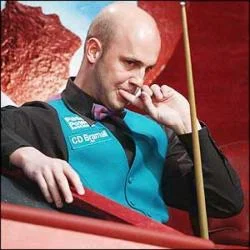
Billy Kelly
- From amateur success to the professional tour
- A record break at the Crucible qualifiers
- A long career through a changing sport
- A place in Irish snooker
For Irish snooker, the route from a strong amateur reputation to the professional tour could be narrow and uncertain. Billy Kelly made that jump in 1981 after winning major amateur events, then spent more than a decade competing against the established professionals of the sport’s expanding circuit. His career did not bring a major tournament title, but a remarkable break in World Championship qualifying gave him a place in snooker history.
From amateur success to the professional tour
Born on 1 May 1945, Kelly built his reputation in amateur snooker. In 1977 he won both the CIU Championship, one of the leading amateur competitions in Britain and Ireland, and the Pontins Autumn Open. At the time, those results marked him out as a player capable of taking on established professionals.
The World Professional Billiards and Snooker Association accepted him as a professional member in 1981. His first tournament was that year’s International Open, where he lost 1–5 to Murdo MacLeod in the opening qualifying round. He also came close in his first UK Championship qualifying match, losing 7–9 to Geoff Foulds. Early attempts to reach the main stages of the Irish Professional Championship and the World Championship ended in narrow setbacks, including an 8–9 loss to Eddie Sinclair in the 1982 World Championship qualifying rounds.
Kelly continued to compete through a period when professional snooker was changing quickly. More tournaments and broader access to the tour brought a crowded field, and he remained a determined presence in the qualifying rounds. He recorded wins in later seasons and reached the last 32 of the 1982 International Open, but he did not progress beyond that stage in a major tournament.
A record break at the Crucible qualifiers
His most celebrated moment came in March 1988, during qualifying for the World Snooker Championship. Facing Tony Kearney, Kelly compiled a break of 141 in the sixth frame. It set a new record for the highest break made in World Championship qualifying, a notable achievement in an era when a high break could turn a single frame into the defining moment of a match.
Kelly won the match 10–4, finishing with another substantial break of 76. Although he did not go on to reach the championship’s televised final stages, the 141 remained a landmark in the tournament’s qualifying history. For a player whose professional career was largely spent outside the spotlight of the biggest events, it was a performance that secured lasting recognition.
A long career through a changing sport
In 1990, Kelly faced the possibility of losing his professional status after a 7–10 defeat to Jason Ferguson in a play-off. The arrangement pitted lower-ranked professionals against leading amateurs for places on the tour. Soon afterward, the association opened membership to players who met its entry requirements and paid the required fee, and Kelly remained involved in professional events through the 1991–92 season.
His career-high world ranking was 54. When his professional run ended, Kelly did not leave competitive snooker behind altogether. He entered World Championship qualifying as an amateur in 2002, 2003, 2005, 2009, and 2013, continuing to test himself against a new generation of players.
A place in Irish snooker
Kelly’s record reflects the demanding reality faced by many professional players outside the small group who collected ranking titles: years of travel, repeated qualifying matches, and the challenge of staying competitive as the sport grew. His amateur victories announced his ability, while his longevity and 1988 record break gave his career a distinctive shape.
He is remembered as an Irish cueist who reached the professional game through success on the amateur circuit and left behind a memorable mark in one of snooker’s most demanding qualifying competitions.