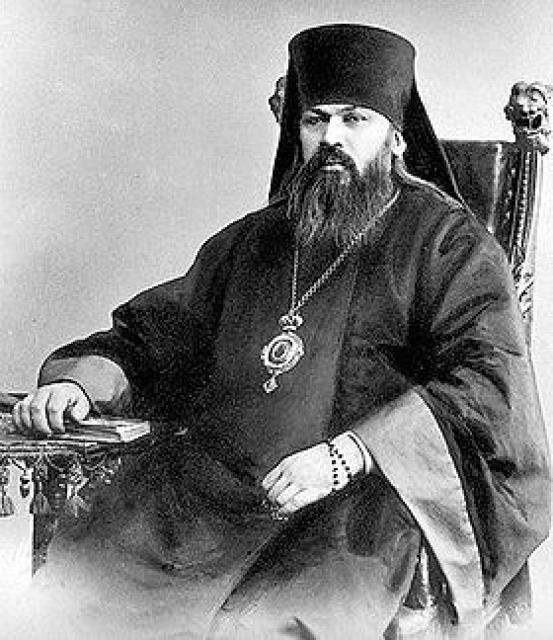
Bishop Antonin
- Early Life and Education
- Academic Career
- Ascension to Bishop
- Conflict and Exile
- Leadership in the Renovationist Movement
- Controversial Legacy
- Scholarly Contributions
Early Life and Education
Antonius, born into a deacon's family, excelled academically and graduated from the Poltava Theological Seminary and the Kyiv Theological Academy. His brilliance in ancient languages, including Hebrew and Arabic, earned him a Master's degree in Theology.
Academic Career
Antonius served as a professor at various seminaries and as a censor for the St. Petersburg Spiritual Censorship Committee. His unconventional behavior and abrasive nature led him to frequently change positions. He was known for his eccentric habits, including remaining in darkness for hours, mourning aloud.
Ascension to Bishop
In 1903, Antonius was consecrated Bishop of Narva, the vicar of the St. Petersburg Diocese. He supported liberal political views and advocated for unrestricted freedom of the press.
Conflict and Exile
Antonius's progressive stance and criticism of imperial authority brought him into conflict with the government. After the 1905 Revolution, he was dismissed and lived in a monastery, continuing his scholarly pursuits.
Leadership in the Renovationist Movement
In 1922, Antonius became the leader of the Renovationist movement, seeking to reform the Russian Orthodox Church. He was proclaimed Metropolitan of Moscow in 1923, asserting authority over all of Russia.
Controversial Legacy
As a Renovationist, Antonius clashed with the established Orthodox clergy and faced accusations of serving the Soviet regime. His actions have been both praised for their progressive nature and criticized for their disruption of ecclesiastical unity.
Scholarly Contributions
Despite the controversy surrounding his religious leadership, Antonius made significant scholarly contributions. His thesis on the reconstruction of the lost Hebrew text of the Book of Baruch is still recognized for its value in biblical studies.


