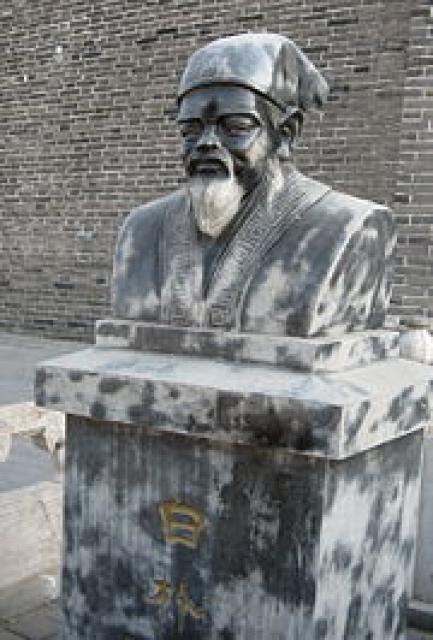
Bo Pu
 China
China- Bai Pu: A Literary Pioneer of Chinese Drama and Poetry
- Literary Pursuits amidst Political Turmoil:
- Poetic Contributions:
- Dramatic Masterpieces:
- Retirement and Legacy:
- Bibliography:
Bai Pu: A Literary Pioneer of Chinese Drama and Poetry
Early Life and Background:Bai Pu (c. 1226?-1306/1310) was a renowned Chinese playwright and poet of the Yuan dynasty. Born in either Hebei or Shanxi province, Bai Pu hailed from a prominent family, with his father serving as an official in the Jurchen Jin dynasty.
Literary Pursuits amidst Political Turmoil:
Despite his father's allegiance to the Jin dynasty, Bai Pu refused to serve the invading Mongols (Yuan dynasty) in protest. Instead, he dedicated himself to literary pursuits, leading a bohemian lifestyle. His defiance stemmed from his loyalty to the Song dynasty, whose emperor his father had once served.
Poetic Contributions:
Bai Pu's poetic legacy includes a collection of "ci" (poetry) titled "Tian Xiao" (Celestial Flute) and 37 "qu" (verse works). His verses, characterized by their lyrical beauty and evocative imagery, have been translated into several languages, including Russian.
Dramatic Masterpieces:
Bai Pu authored 16 "zaju" (Chinese dramatic works), of which only three have survived to this day:
"The Story of the Eastern Wall": A historical play based on the Han dynasty.
"Rain in the Platanus Tree": Translated into Russian, this play narrates the love story between Emperor Xuanzong and his concubine Yang Guifei.
"The Horseman at the Fence": A comedic piece that explores the theme of youthful rebellion and the freedom of choice in marriage.
Retirement and Legacy:
In his later years, as his son rose through the ranks of the Yuan bureaucracy, Bai Pu returned to a more conventional lifestyle. By this time, he had established himself as one of the most influential literary figures of his era. His works continue to be celebrated for their artistic merit and historical significance, providing a glimpse into the vibrant literary scene of thirteenth-century China.
Bibliography:
Anthology of Chinese Poetry, Vol. 3Chinese Landscape Lyricism of the 3rd-14th Centuries
Man from the Mountains (Eastern Almanac, Vol. 6)
Yuan Drama




