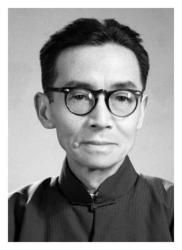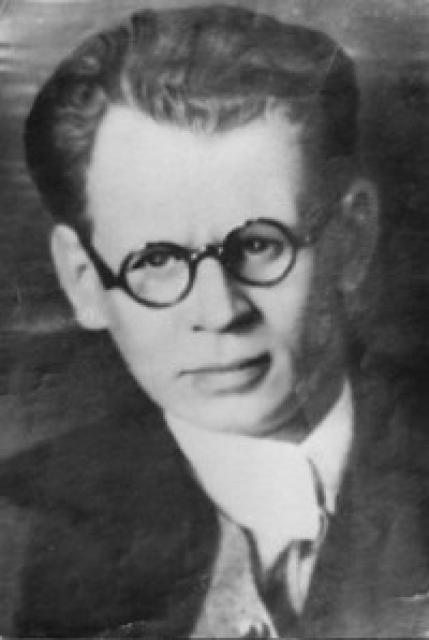
Boris Gordeev
- Early Life and Education
- Architectural Beginnings
- Exile and Architectural Prominence
- Post-Constructivism and Administrative Roles
- Health Struggles and Later Work
- Legacy and Death
Early Life and Education
Born on September 13, 1903, in an accountant's family, the young architect began his academic journey in 1920 upon graduating from Medvednikovskaya Gymnasium in Moscow. In 1921, he enrolled in the engineering-construction faculty of Moscow Higher Technical School (MVTU), specializing in the factory branch. After completing his studies in 1926, he embarked on his architectural career.
Architectural Beginnings
As Chief Engineer of the Moscow branch of the Kama-Ural Paper and Forest Trust, he played a significant role in designing the Central Aerohydrodynamic Institute (TsAGI), the Tavda Factory, and the MVTU building. His innovative designs were showcased at the Machine Age: Exhibition of Contemporary Architecture in New York in 1927.
Exile and Architectural Prominence
In 1928, the architect was exiled to Novosibirsk, where he continued to practice his craft. He became a prominent figure in the modernist architectural movement known as Constructivism. His notable works in Novosibirsk include the residential quarter at Privokzalnaya Square (1929-1932), Politikaorjanin Cooperative (1929-1932), Dinamo residential and sports complexes (1930-1932), Kuzbassugol Cooperative quarter (1931-1933), NKVD residential complex (1931-1932), Kraiispolkom building (1931-1933), and the iconic "Dom pod chasami" ("House with the Clock") (1932-1934).
Post-Constructivism and Administrative Roles
In 1932, he was appointed City Architect of Novosibirsk. From 1933 to 1939, he served as Chief Architect of the House of Science and Culture (now Novosibirsk Opera and Ballet Theatre). He also contributed to the design and construction of the Novosibirsk-Glavny railway station.
Health Struggles and Later Work
In 1935, he contracted tuberculosis, leading to his relocation to Moscow in 1939 for treatment. In 1941, he was sent to Krasnoyarsk for construction projects. As his illness worsened in 1943, he returned to Novosibirsk for treatment at the evacuated Moscow Tuberculosis Institute.
Legacy and Death
After a prolonged and debilitating illness, the architect passed away in the 15th Tuberculosis Hospital in Novosibirsk. He was buried in the Zaeltsovskoye Cemetery, but the exact location of his grave remains unknown. His architectural legacy lives on in the numerous buildings and landmarks he designed, which continue to shape the urban landscape of Novosibirsk.