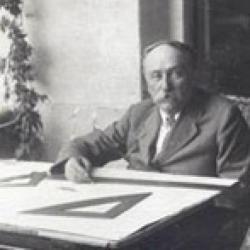
Pierre Jeanneret
 France
- Biography of Pierre Jeanneret
- Collaboration with Le Corbusier
- Chief Builder of Chandigarh
- Designer and Architectural Leader
Biography of Pierre Jeanneret
Pierre Jeanneret was a French architect and designer who was born on March 2, 1896, in Geneva, Switzerland. He graduated from the School of Fine Arts in Geneva and then interned as an architect in the workshop of Auguste Perret in Paris from 1920 to 1921. In 1921, his cousin, architect Le Corbusier (Eduard Jeanneret), invited him to join him in Paris and they opened an architectural firm together.
Collaboration with Le Corbusier
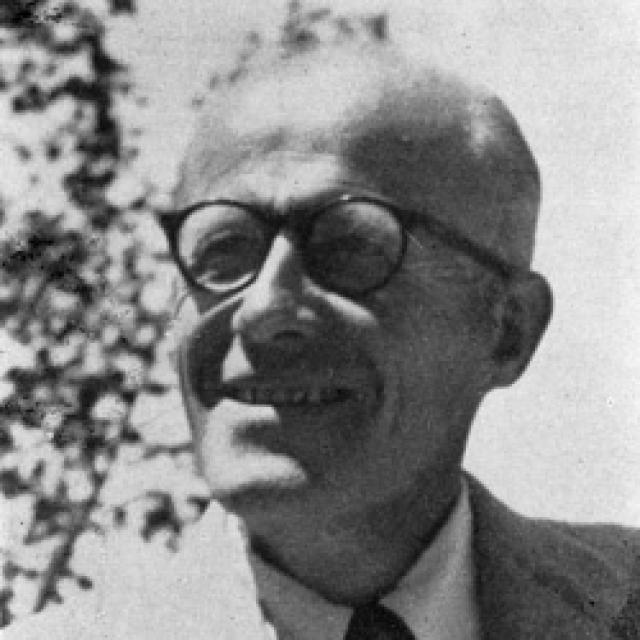
From that moment on, Pierre Jeanneret became a permanent collaborator and companion of Le Corbusier, and the projects they created together (until 1940) were signed as "Eduard Jeanneret/Pierre Jeanneret". Jeanneret is primarily known as the constant companion and associate of his much more famous brother, Le Corbusier, under whose shadow he worked for most of his life.
Chief Builder of Chandigarh
Jeanneret is best known as the chief builder of Chandigarh, the capital of Punjab state in India, a city designed by Le Corbusier. Between 1951 and 1957, Jeanneret spent the last 15 years of his life in India, overseeing the construction of Chandigarh and assisting in its design. He collaborated with architects Maxwell Fry and Jane Drew, a husband and wife team from England, on the residential development of the city, as well as the design of hostels, schools, and hotels. Jeanneret himself designed some of the buildings on the Punjab University campus, including the library and Gandhi Bhawan.
Designer and Architectural Leader
Jeanneret also made a name for himself as a furniture designer. In 1929, he showcased a set of modern furniture at the Autumn Salon, which was designed in collaboration with Le Corbusier and Charlotte Perriand. The furniture, including tables, chairs, and modular cabinets, was made using modern materials such as steel tubes, glass, and artificial leather.
After the war, Jeanneret's collaboration with Le Corbusier was interrupted when their studio on Rue de Sèvres, 35 was closed. However, Jeanneret continued his design work and also served as the Chief of Architecture and Planning for Chandigarh. He became an accepted member of the local society and held the position until his death. He was also the director of the School of Applied Arts in Chandigarh.
Gandhi Bhawan, a unique structure that symbolizes the three parts of Indian philosophy, was one of Jeanneret's personal projects in Chandigarh. In 1999, a large photo exhibition showcasing the contributions of Le Corbusier and Pierre Jeanneret to the creation of the city was held in Gandhi Bhawan.
Throughout his career, Jeanneret remained dedicated to the fields of architecture, design, and planning. His contributions to the development of Chandigarh and his innovative designs continue to be celebrated and studied in the world of architecture and design.