
Boris Poplavskiy
 France
Biography of Boris Poplavsky
Boris Poplavsky was a renowned poet and writer of the Russian diaspora (the first wave of emigration). He was born on May 24 (June 6) in Moscow, into a Polish-Lithuanian-Ukrainian family. His father, a student of P. I. Tchaikovsky, graduated from the Moscow Conservatory but abandoned music to pursue industrial activities. Poplavsky's sister, Natalia, who died at a young age, published a collection of poems titled "Verses of the Green Lady" in 1917.
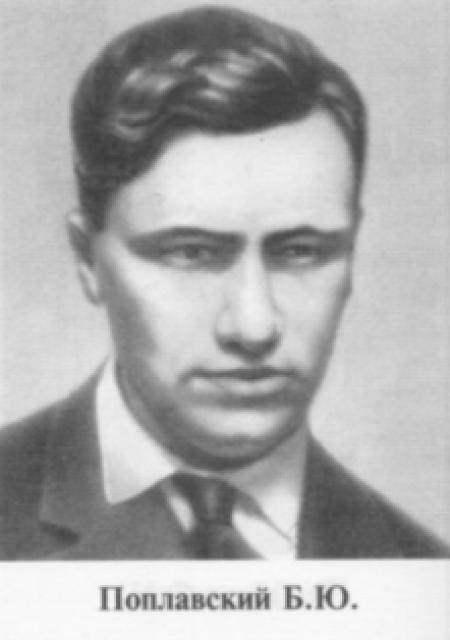
During the Russian Civil War, Poplavsky left for Paris through Constantinople. He was one of the founders of the Tsarigradskoye Fellowship of Poets and was a member of literary groups in Paris such as "Gatarapak" (1921-1922), "Through" (1923-1924), the Union of Young Poets and Writers (since 1925), and "Nomadic Tribe". In the 1930s, he was considered one of the main hopes of Russian literature in the first wave of emigration, despite leading a bohemian and unsettled life.
Poplavsky's prose and poetry were heavily influenced by the works of Arthur Rimbaud, French surrealism, and Russian symbolism (primarily Blok). Additionally, in the early 1920s, Poplavsky experienced a strong influence from Ilya Zdanevich and later wrote that he was a "sharp futurist" during that time.
He authored the poetry collection "Flags" (1931) and posthumously published collections such as "Snow Hour" (1936), "In a Wax Wreath" (1938), "The Unknown Direction Dirigible" (1965), and "Automatic Poems" (1999). He also wrote novels such as "Apollo Bezobrazov" (1932) and "Home from the Skies" (fragments appeared in 1936-1938, complete edition in 1993). The main theme of his poetry was death, and the motif was the enjoyment of death and dying. Poplavsky is known for developing this motif through the famous choriambus (K. Taranovsky), which allowed M. L. Gasparov to call him the "master of choriambic death." He widely used metaphors and personifications in his poetics.
In terms of the structure of his poetics, Boris Poplavsky is closest to Boris Pasternak and the poets of OBERIU, particularly Zabolotsky, among the Soviet poets of that time. Poplavsky died in Paris on October 9, 1935, along with a chance acquaintance from drug poisoning. According to one version, it was a suicide, while another suggests that Poplavsky's friend, who wanted to take someone to the other world with him, decided to end his life.




