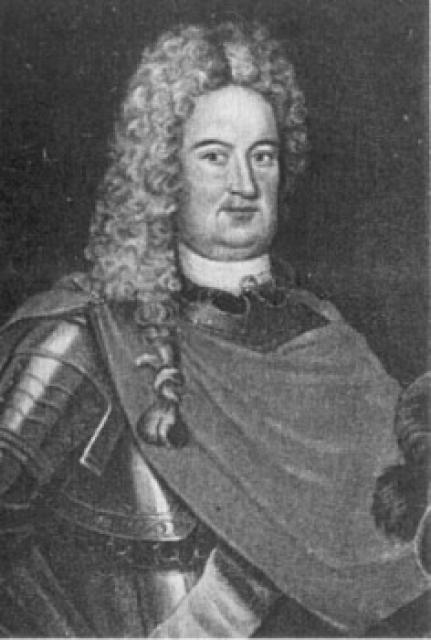
Boris Sheremetev
 Russia
- Early Life and Career
- Service under Peter the Great
- Northern War and Military Successes
- Later Years and Death
- Legacy
Field Marshal Boris Petrovich Sheremetev: A Companion of Peter the Great
Early Life and Career
Boris Petrovich Sheremetev was born in 1652 into a distinguished boyar family. At the age of 13, he was appointed as a chamberlain to the tsar. In 1682, he received the boyar title.
Sheremetev demonstrated his diplomatic and military abilities early on. In 1686, he played a key role in negotiating the "Eternal Peace" with the Polish-Lithuanian Commonwealth. He then led the Russian delegation to Warsaw to ratify the treaty.
Service under Peter the Great
Sheremetev's posting to command troops in Belgorod and Sevsk kept him away from the political turmoil in Moscow during the struggle between Princess Sophia and Peter the Great. In 1695, he participated in Peter's first Azov campaign, albeit in a peripheral role.
From 1697 to 1699, Sheremetev undertook a diplomatic mission to Western Europe on behalf of Peter I. Upon his return, he adopted Western dress, earning the tsar's favor.
Northern War and Military Successes
During the Great Northern War (1700-1721), Sheremetev emerged as a cautious but talented military commander, gaining Peter's trust. Following the Russian defeat at Narva, he was sent to the eastern Baltic region.
In 1701, at the Battle of Erastfer, Sheremetev inflicted a crushing defeat on the Swedes. He received the Order of St. Andrew the First-Called and the rank of General Field Marshal for his victory.
Sheremetev continued his military successes, capturing several fortresses and suppressing the Streltsy uprising in Astrakhan. In recognition of his services, he became the first person in Russia to be granted the title of count in 1705.
Later Years and Death
Sheremetev played a lesser role in the Battle of Poltava but still earned Peter's approval. He captured Riga in 1709-1710. After an unsuccessful campaign in the Pruth in 1710, he expressed his desire to become a monk. However, Peter I persuaded him to marry the young beauty A.P. Naryshkina, who bore him four children.
In 1715, Sheremetev commanded the Russian expeditionary force in Pomerania and Mecklenburg. He returned to Moscow in 1717 and died in 1719 following a severe illness.
Legacy
Despite his request to be buried in the Kiev-Pechersk Lavra, Peter I ordered Sheremetev's interment in the Alexander Nevsky Lavra in St. Petersburg, ensuring that even in death, his loyal companion would continue to serve the "state."


