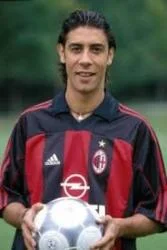
Branko Bakovic
Branko Baković built a career that took him from his hometown club in Kragujevac to teams in several countries and leagues. Most often deployed as an attacking midfielder or forward, he became a familiar name to OFK Beograd supporters during a five-season spell in which he scored regularly and helped the club reach the semi-finals of the 2004 UEFA Intertoto Cup. His professional path later took him through China, Romania, Ukraine, Bosnia and Herzegovina, Montenegro, and Switzerland.
Early years in Kragujevac
Baković was born on August 31, 1981, in Kragujevac, then part of Yugoslavia. He came through the youth academy of Radnički Kragujevac and made his first-team debut for the club in the Serbian top flight. His early professional seasons established him as an attack-minded player, capable of moving between midfield and the forward line.
In 2002 he transferred to OFK Beograd, a move that brought him to the capital and into a more prominent role. Over the following seasons, he became one of the team’s productive attackers. League records credit him with 20 goals in 93 appearances for OFK between 2002 and 2006. The club also made a notable European run, reaching the semi-finals of the 2004 UEFA Intertoto Cup.
Playing abroad
Baković’s next phase took him abroad. In 2007 he played in China for Shandong Luneng and Chengdu, before continuing to Romania with Politehnica Iași and then Ukraine with Naftovyk-Ukrnafta Okhtyrka. These moves exposed him to different football cultures and competitions, from China’s developing top league to the professional leagues of Eastern Europe.
He returned to Radnički in 2009 after seven years away from his hometown club. The move marked a return to familiar surroundings after playing in Belgrade and several countries. He subsequently continued his career with clubs including Slavija Sarajevo in Bosnia and Herzegovina, Grbalj in Montenegro, and Mladenovac in Serbia. In the later part of his career, he played for Black Stars Basel in Switzerland.
International experience and later career
Baković also represented the national under-21 side of Serbia and Montenegro, earning one appearance in 2003. At club level, his career spanned multiple leagues and included spells both at high-profile teams and at clubs where he could contribute as an experienced attacking player.
His movement between clubs reflected the increasingly international nature of football careers in the 2000s. Rather than remaining in one domestic system, Baković took opportunities across Europe and Asia, adapting to new teams and settings as he continued to play. He retired from professional football after his final recorded seasons with Black Stars Basel.
Legacy
Baković’s career is remembered especially for his time at OFK Beograd, where his goals and attacking play helped make him a prominent player during the club’s early-2000s period. His professional journey was unusually varied for a Serbian footballer of his generation, spanning several countries and leagues while returning more than once to Radnički, the club where his senior career began.
From the youth ranks in Kragujevac to international experience with Serbia and Montenegro’s under-21 team, his story reflects the routes available to ambitious players in the modern game. Baković combined the identity of a hometown product with the experience of a footballer who made his career across borders.