Brielle Coutu
 USA
USA- Biography of Brielle Cutie
- Brielle's Struggles and Medical Treatment
- A Life Full of Smiles
- About Sturge-Weber Disease
Biography of Brielle Cutie
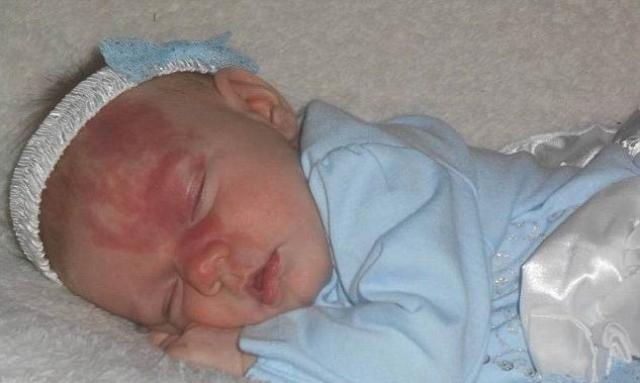
Brielle Cutie, a little girl born with a large red birthmark on her face and suffering from multiple seizures, has become a victim of Sturge-Weber disease and the bullies she faces. However, she fights back with her most powerful weapon - her smile. Now two years old, Brielle Cutie from Coventry, Rhode Island, looks different from other children. On her face is a large, dark red birthmark known as a "port-wine stain". But the birthmark is an indicator of a much more serious condition. Through a special MRI, doctors discovered that Brielle has Sturge-Weber disease, often accompanied by neurological and psychiatric disorders. Cutie suffers from multiple seizures and developmental delays, and takes six different medications. The birthmark covers her forehead and extends down the left side of her face. The dark, reddish stain is a result of abnormalities in the smallest blood vessels of the body, known as capillaries. In fact, similar birthmarks are common in healthy infants, but Brielle's parents, Heather and Justin, learned shortly after her birth that in 8-15% of cases, a "port-wine stain" indicates the presence of Sturge-Weber disease. According to statistics, "port-wine stains" occur in approximately one out of every 1000 children. Sturge-Weber disease is a rare congenital condition characterized by vascular birthmarks and neurological abnormalities. These abnormalities are not easily detectable, so a special MRI is used for diagnosis to visualize the developmental defects. Brielle underwent an MRI one month after birth, and the results confirmed that her brain has capillary malformations. "In patients with Sturge-Weber disease and capillary malformations in the brain, the risk of epileptic seizures reaches 90%," explains Dr. Anna Pinto, Brielle's neurologist.
Brielle's Struggles and Medical Treatment
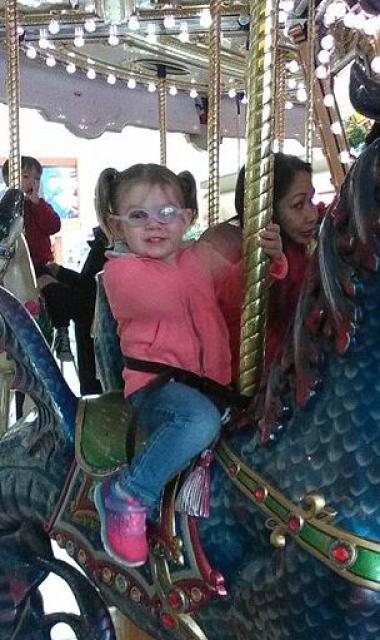
Seizures began for Cutie when she was only three months old. The seizures continued for several days, and she was taken to the hospital in Rhode Island. Eventually, the seizures led to a serious stroke-like condition. Today, Brielle is a patient at Boston Children's Hospital, where they help prevent seizures and treat other manifestations of Sturge-Weber disease, such as glaucoma, which can develop in both eyes. Two out of the six medications she takes help control seizure activity to the maximum extent possible. One medication prevents neurological deficits (problems with nerves, spinal cord, and brain function). The remaining three medications fight the side effects of seizure-controlling drugs. Brielle is under the care of a team of specialists, including a dermatologist, endocrinologist, ophthalmologist, and pediatric sleep specialist.
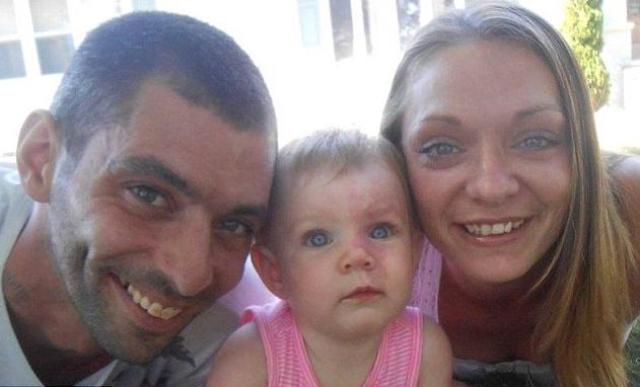
Despite the serious medical assistance, Cutie faces many challenges every day. Last month, she caught an infection, which caused her to experience over 30 seizures in one day. "For an ordinary person, a cold doesn't pose serious problems, but that's not the case for our Brielle," said Heather. However, Cutie's family trusts the team of doctors who help her live as normal a life as possible.

A Life Full of Smiles
Annette, Brielle's grandmother, said, "At 30 months old, Brielle will be involved in early intervention and will start attending classes from the age of three." This brings mixed feelings for the family. Annette explains, "Yes, we are excited because all her cousins started preschool at three years old, and Brielle will be on track with them. But we also worry because there are so many different conditions that my granddaughter is susceptible to."
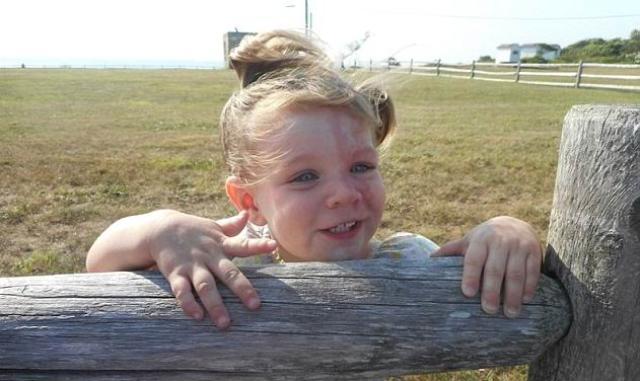
The family has created a Facebook page to educate people about Sturge-Weber disease and the challenges Brielle faces. In addition, they are raising funds, including for travel expenses to Ohio for the upcoming Sturge-Weber Foundation Conference. Despite everything, Cutie's family is most amazed by her joyful spirit. She continues to smile, loves to chat, listen to music, and dance. "She is a happy child. My granddaughter loves teasing her dad. She is so sociable, always approaching people and saying, 'Hello'," says Annette.

About Sturge-Weber Disease
The exact number of people with this condition is unknown, as many cases go undiagnosed. It is estimated that Sturge-Weber disease affects one in 40,000 to 400,000 individuals. The main characteristic of the disease is a "port-wine stain" on the face. The color of the birthmark can vary from light pink to dark purple, caused by an excess of capillaries - the smallest blood vessels in the body - just beneath the skin. In rare cases, the birthmark may be absent. Excessive growth of blood vessels (angiomas) on the surface of the brain is often observed, located on the back of the head and on the same side as the port-wine stain. Angiomas create abnormal conditions for brain function in the affected area, where seizure activity is most common. Additionally, varying degrees of motor and cognitive developmental delays may be present. Glaucoma - increased eye pressure - is another possible manifestation of Sturge-Weber disease. It can appear at birth or develop later in 70% of cases. Typically, glaucoma affects the eye affected by the "port-wine stain". Treatment for Sturge-Weber disease depends on its manifestations. Patients may be prescribed anticonvulsant medications, undergo surgery to address eye problems, or receive therapy to address developmental delays.