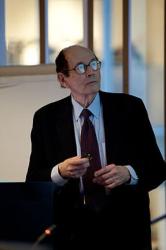
Bruce Ames
 USA
USABiography of Bruce Ames
Bruce Nathan Ames was born on December 16, 1928, in New York City. He grew up in New York City and attended Bronx High School of Science. He continued his education at Cornell University in Ithaca, where he received his undergraduate degree.

Ames then pursued his graduate studies at the California Institute of Technology. He focused his research on cancer and aging and went on to write over 500 scientific papers. His groundbreaking work earned him a place among the top 100 most cited scientists in all fields.

Ames is currently a professor of biochemistry and molecular biology at the University of California, Berkeley, and a senior scientist at the Children's Hospital Oakland Research Institute (CHORI). He has dedicated his research to understanding the mechanisms of aging and identifying agents that can prevent diseases, malnutrition, and obesity.

One of Ames' notable contributions to science is the development of the Ames test, a genetic test named after him. This test is designed to assess the mutagenic potential of chemical compounds in a simple and cost-effective way. It uses certain strains of Salmonella Typhimurium bacteria to detect the presence of mutagens faster and more inexpensively than previous methods.
Ames' discovery has helped identify potential carcinogens that were previously used in commercial products. For example, hair dye that yielded a positive result in the test was removed from production. His subsequent laboratory studies have led to the development of a comprehensive system for assessing the relative risk of mutagenic or carcinogenic substances, allowing for a better understanding of the actual level of threat.
Ames' hypotheses and controversial views have sparked criticism from many ecologists. He has argued that the most dangerous genetic damage in humans occurs as a result of DNA oxidation during normal metabolic processes. He believes that "environmental carcinogens" are responsible for the primary effect that leads to the chronic division of stem cells, making the cell's protective mechanisms less effective.
Ames has been an advocate against the banning of synthetic pesticides and other chemical substances, such as daminozide, which research has shown to be carcinogenic. He has expressed concerns that excessive efforts to find substances with minor health consequences may lead to public confusion and quickly deplete already limited financial resources, potentially overlooking a significant threat.
Throughout his career, Ames has received numerous awards for his contributions to science. In 1970, he was elected as a member of the American Academy of Arts and Sciences (AAAS). He has been honored with the Bolton S. Corson Medal in 1980, the Tyler Prize for Environmental Achievement in 1985, the International Prize of Japan in 1997, the National Medal of Science in 1998, the Thomas Hunt Morgan Medal in 2004, and many more.