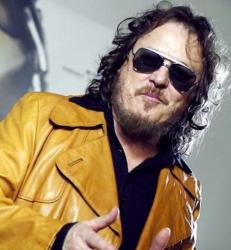
Buddy Guy
 USA
USABuddy Guy Biography
Buddy Guy, a legendary blues singer-guitarist, is a veteran of the Chicago blues scene and one of the leaders of modern blues. He is a multiple winner of the W.C. Handy Award and has won four Grammy Awards in the blues categories. Born in a farming family, Guy made his first guitars out of cigar boxes and wires he pulled from mosquito nets. He taught himself to play by listening to the radio and records. Among his early influences were John Lee Hooker, Lightning Hopkins, and Muddy Waters. Guy started performing professionally as a teenager, but he would face stage fright and insecurity, often performing with his back to the audience. In Louisiana, he made his first recordings for records. But his blues career truly began in 1957 after moving to Chicago, where he was immediately taken under the wing of Muddy Waters, who happened to hear Guy play. Waters gave the young musician a job at Chess Studios and in Chicago clubs. Guy released his first solo singles on the Artistic and Cobra labels in 1959. In the Chess studio, he accompanied the stars of the golden age of Chicago blues, such as Muddy Waters, Sonny Boy Williamson, Little Walter, Koko Taylor, and others, on recordings that are now considered blues classics. In 1962, his single "Stone Crazy" reached number 12 on the rhythm and blues charts. Buddy Guy became one of the first musicians to create a new blues style in Chicago called "West Side Blues." Unable to find understanding from the Chess brothers, he released his first albums on the new Chicago label, Vanguard. The albums had some success but received criticism for being too reminiscent of B.B. King, James Brown, and Johnny "Guitar" Watson. Guy worked in Willie Dixon's American Folk Blues Festival. In the 1960s, he formed a permanent duo with Junior Wells, a longtime sideman for Muddy Waters. Their concerts in the late 60s and early 70s were successful. The duo recorded several albums with the financial support of their fans, including Eric Clapton and The Rolling Stones, who had become blues enthusiasts. However, with the declining interest in blues in the early 70s, their careers suffered. Guy had to work as a truck driver or a construction worker to make ends meet. The gaps in his discography lasted up to ten years. An album recorded in 1979 in Paris in just a few hours represented Buddy Guy's blues in a completely unusual rock-experimental sound, similar to Stevie Ray Vaughan's later innovations. His participation in Eric Clapton's concerts in 1990 at London's prestigious Royal Albert Hall marked the beginning of Buddy Guy's return to the big stage. This led to the release of his albums and singles that charted in popularity. His 1991 album, recorded for the English label Silvertone, featured English stars Eric Clapton, Jeff Beck, and Mark Knopfler from Dire Straits and was a sensational success. The album dedicated to the memory of Stevie Ray Vaughan brought Buddy Guy his first Grammy Award and eventually reached platinum status. Two subsequent albums were also Grammy Award winners. Bonnie Raitt, John Mayall, Paul Rodgers, and members of the blues band Little Feat participated in the recording of the 1993 album, while former members of Stevie Ray Vaughan's Double Trouble played on the 1994 album. Among Buddy Guy's "new era" albums, a live recording made at his Chicago club, Legends, is considered a blues masterpiece. Here, the musician feels at home and allows himself to play as he pleases. His blues sound is natural and relaxed, playful when needed, and hot when desired. This ease is built upon a solid foundation of deep understanding of the genre, gained through long experience and fueled by his love for his music and his audience.