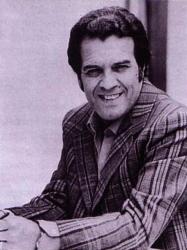
Bulbul
- Childhood and Musical Beginnings
- Musical Career and Education
- Pioneer of Azerbaijani Vocal School
- Contributions to Musical Research and Education
- International Recognition and Awards
- Family and Personal Life
- Legacy and Impact
Childhood and Musical Beginnings
Bulbul, whose real name was Murtuza Mamedov, was born on June 22, 1897, in the village of Khanbagy in the Shusha district of Azerbaijan. His father was a cobbler and his mother was the daughter of a Kurdish nomad. From an early age, Bulbul displayed exceptional musical abilities, earning him the nickname "Bulbul" (meaning "nightingale" in Azerbaijani), which he later adopted as his stage name.
Musical Career and Education
In 1916, Bulbul made his stage debut as a folk singer (khanende), performing Azerbaijani mughām and folk songs. In the 1920s, he became involved in organizing musical and theatrical activities in Ganja, serving as the chairman of the Union of Artists of Azerbaijan and as a delegate to the first All-Azerbaijani Congress of Art Workers.
In 1920, Bulbul became a soloist with the Azerbaijan State Theater (later renamed the Azerbaijan State Academic Opera and Ballet Theater). He also performed as a concert singer. In 1921, he enrolled in the Baku Conservatory, graduating in 1927.
From 1927 to 1931, Bulbul pursued further vocal training at the Teatro alla Scala in Milan under the guidance of Giovanni Anselmi and Rosina Grani. He became the first Azerbaijani to win the first All-Union Competition for Pianists, Violinists, Cellists, and Vocalists held in Moscow in 1933.
Pioneer of Azerbaijani Vocal School
Bulbul played a pivotal role in the development of the Azerbaijani national musical theater. He was the first vocalist to transition from Eastern vocal traditions to the European school of singing. By synthesizing the best techniques of Azerbaijani national singing with Russian and European methods, he established a new vocal school in Azerbaijan.
Contributions to Musical Research and Education
From 1932 to 1961, Bulbul taught at the Azerbaijan State Conservatory, becoming a professor in 1940. He mentored numerous students, including Eldar Akhundov, Shafiga Nevruz, Khanlar Kerimov, Fikret Mehdiyev, and Rashid Mustafayev.
Bulbul also established and directed the Republican Scientific Research Center of Music (1932-1944), where he made significant contributions to the collection, recording, study, and publication of Azerbaijani folk music.
International Recognition and Awards
Bulbul was an active member of the "USSR-Italy" society and was awarded the "Garibaldi Star" for his role in fostering friendly relations between the two countries. He served as the jury chairman of the Classical Singing Competition of the Peoples of the East at the VI World Festival of Youth and Students in Moscow in 1957.
Bulbul was recognized for his artistic achievements with numerous awards, including the title of People's Artist of the USSR (1938), the Stalin Prize (1950), two Orders of Lenin, and two Orders of the Red Banner of Labor. He was also a laureate of the All-Union Vocal Competition and was named an Honorary Citizen of Sumgayit.
Family and Personal Life
Bulbul was married three times. His first marriage was to Zeynab-khanum, with whom he lived from 1917 until her death in 1936. They had no children. He later married Adelaida Mamedova, who became the director of the Bulbul Memorial Museum in Baku. They had three sons: Chنگیз, Polad Bulbuloglu, and Emin Mamedov. Bulbul's grandson, Teymur Polad-oglu Bulbul, is a musician and businessman.
Legacy and Impact
Bulbul passed away on September 26, 1961, and was buried in the Alley of Honor in Baku. His legacy lives on through his exceptional artistry, his contributions to Azerbaijani music, and the numerous musicians he inspired and mentored. His name is synonymous with the flourishing of Azerbaijani opera and the development of a unique Azerbaijani vocal school.