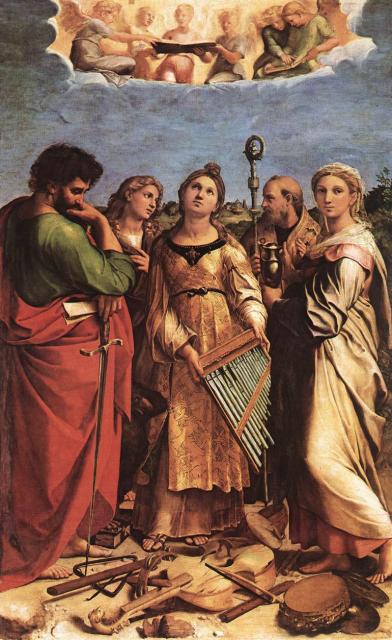
Caecilia Romana
 Italy
Italy- Saint Cecilia: A Devout Maiden and Patron of Music
- Marriage and Conversion
- Martyrdom
- Intervention of Saint Maximus
- Saint Cecilia's Death and Legacy
- Patron Saint of Music
- The "Ode for St. Cecilia's Day"
Saint Cecilia: A Devout Maiden and Patron of Music
Birth and Early LifeSaint Cecilia, a revered Roman maiden, lived during the 3rd century AD. Hailing from a wealthy and aristocratic family, she embraced Christianity at a tender age. Renouncing worldly pleasures, she dedicated her life to serving the less fortunate and preserving her purity.
Marriage and Conversion
Despite her parents' plans to marry her to the wealthy pagan Valerian, Cecilia remained steadfast in her faith. Through her unwavering prayers, she persuaded Valerian to abandon their physical union and embrace Christianity. Cecilia's influence extended to Valerian's brother, Tiburtius, who also converted. Together, they secretly distributed their wealth to the poor.
Martyrdom
Their charitable activities drew the ire of the Roman prefect, Turcius Almachius. Summoning the trio, he demanded that they renounce their beliefs. Refusing, they were subjected to brutal torture. Despite the suffering, Valerian and Tiburtius remained resolute in their faith, inspiring others to stand firm.
Intervention of Saint Maximus
As the brothers were led to execution beyond the city walls, they encountered Marcus, the commander of the escort. Moved by their unwavering faith, Marcus converted to Christianity and invited the condemned to his home for baptism.
Saint Cecilia's Death and Legacy
With the execution of Valerian and Tiburtius, Saint Cecilia embarked on a mission to spread the gospel. Imprisoned and tortured, she miraculously survived three nights in a scalding bath. Ultimately, she succumbed to a sword wound but remained steadfast in her beliefs.
Christians later discovered her incorrupt body in the Roman catacombs. Her relics were transferred to the Church of Santa Cecilia in Trastevere, where they still reside today.
Patron Saint of Music
From the 16th century onward, Saint Cecilia has been venerated as the patroness of sacred music. Legend has it that she sang spiritual hymns as she was led to her execution, while pagan musicians played nearby. She is often depicted with musical instruments, particularly the organ or violin.
The "Ode for St. Cecilia's Day"
Composed by George Frideric Handel in 1739, the "Ode for St. Cecilia's Day" is a musical masterpiece that celebrates the saint's patronage. Performed annually on November 22, it has become a cherished tradition for musicians and music enthusiasts alike.


