Camille Pissarro
 France
Biography of Camille Pissarro
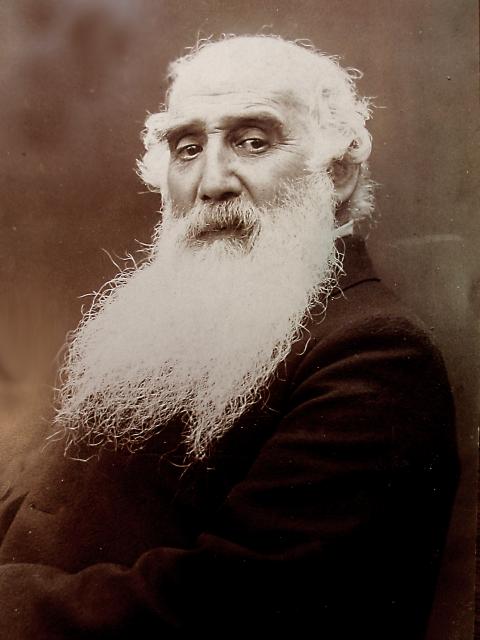
Camille Pissarro, a French Impressionist artist, had a strong influence on the Impressionists, independently developing many principles that formed the basis of their painting style. He was friends with artists such as Degas, Cezanne, and Gauguin. Pissarro was the only participant in all 8 Impressionist exhibitions.
Early Life and Education
Camille Pissarro was born on July 10, 1830, on the island of Saint Thomas in the West Indies. He came from a bourgeois family, his father being Sephardic Jew Abraham Pissarro, and his mother Rachel Manzano-Pomié, a native of the Dominican Republic. Pissarro lived in the West Indies until the age of 12, and then, at the age of 25, he moved to Paris with his entire family.
After finishing school, Pissarro traveled back to Saint Thomas and Venezuela, where he studied the art of painting in Caracas with his friend, Danish artist Melbye. In 1855, he permanently returned to France. From 1855 to 1861, he studied at the School of Fine Arts and the Swiss Academy in Paris, with his teachers being Camille Corot, Gustave Courbet, and Charles-François Daubigny. He also took private lessons from J. Danby. During this period, his main subjects were rural landscapes and views of Paris.
Later Life and Political Views
During the Franco-Prussian War of 1870-1871, Pissarro moved to London. Many of his works left in Paris were destroyed by German soldiers living in his house, leaving only forty paintings preserved. Pissarro was a committed anarchist and regularly provided financial support to anarchist publications and activists in France and Belgium. However, anarchism did not influence his artwork or his practical life. In order to support himself financially, the artist occasionally engaged in commercial activities with his father.
Artistic Career
Pissarro had a significant impact on the Impressionists, independently developing many principles that formed the basis of their painting style. He was friends with artists such as Degas, Cezanne, and Gauguin. Pissarro was the only participant in all 8 Impressionist exhibitions.
Pissarro initially started his artistic journey as a student of Camille Corot, reflecting his inherent love for landscape painting. However, he also paid great attention to drawing during the early stages of his career. In his early works, he particularly focused on portraying illuminated objects in the air. Light and air became the leading themes in Pissarro's art. Over time, he freed himself from Corot's influence and developed his own style. From 1866, his palette became lighter, and his dominant subject became space filled with sunlight and light air, eliminating the neutral tones characteristic of Corot.
Pissarro's renowned works combined traditional landscape subjects with a unique technique in depicting light and illuminated objects. His mature paintings were created with dense brushstrokes, conveying a physical sense of light that he aimed to capture. In 1890, after becoming acquainted with Georges-Pierre Seurat, Pissarro became fascinated with the technique of pointillism (separate application of brushstrokes). However, these works sold poorly, and the artistic expression that Pissarro sought to convey through this technique gradually exhausted itself and no longer brought him artistic satisfaction. Pissarro returned to his usual manner of painting.
In the last years of his life, Pissarro's vision significantly deteriorated. Despite this, he continued working and created a series of views of Paris filled with magnificent artistic emotions. The unusual perspectives of these paintings were due to the fact that the artist painted them from hotel rooms rather than on the streets. This series became one of the highest achievements of Impressionism in conveying light and atmospheric effects and is widely recognized as a symbol of Pissarro's artistic legacy.
Pissarro also worked with watercolors and created numerous etchings and lithographs. He even purchased a special press and installed it in his home for lithography purposes.