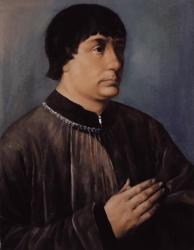
Carl Kretschmer
 Germany
- Origins and Musical Training
- A Career at Dresden’s Court Church
- Compositions and Operas
- Honors and Retirement
- Family and Legacy
Carl Franz Edmund Kretschmer, known professionally as Edmund Kretschmer, was a German organist and composer whose musical life was closely tied to Dresden’s Catholic Court Church. A gifted singer and instrumentalist in his youth, he later became a leading church musician, directed the Royal Chapel Boys, wrote four operas, and composed a wide range of sacred and secular music.
Origins and Musical Training
Kretschmer was born on August 31, 1830, in Ostritz in Upper Lusatia. His father, Franz Kretschmer, was rector of the town school and an able musician. He gave his son his first music lessons and soon brought him into local performances, where the boy appeared as a violinist and, thanks to his resonant alto voice, as a choir and solo singer.
In 1846, Kretschmer went to Dresden to study composition with Ernst Julius Otto and organ with Johann Gottlieb Schneider the Younger, celebrated in his day as the “King of the Organ.” His early musical life also brought him into contact with prominent performers, including Anton Mitterwurzer and the singers Nina and Henriette Sontag, who encouraged his development. In 1849 he sang under Richard Wagner in a performance of Beethoven’s Ninth Symphony.
A Career at Dresden’s Court Church
Kretschmer initially worked as a teacher. In 1854, he became assistant organist at Dresden’s Catholic Court Church; in 1863, he was appointed court organist. His responsibilities expanded over time. He took charge of the Royal Chapel Boys in 1872 and became choirmaster at the church in 1880.
His work placed him at the heart of Dresden’s musical institutions through a period when the city’s opera was led by a succession of prominent conductors. Alongside his church posts, he taught numerous pupils, some of whom later gained recognition beyond Germany. Among the composers associated with his teaching were Franz Curti, Reinhold Kühnel, Robert Manzer, and Kurt Striegler.
Compositions and Operas
Kretschmer’s output ranged from songs, including children’s songs, to hymns, motets, orchestral marches, vocal quartets, works for male chorus and orchestra, four masses, and offertories. His first major public success came in 1865, when his choral and orchestral work Die Geisterschlacht was performed at the first German Sängerbund festival in Dresden and received a prize. Three years later, he won first prize in an international competition in Brussels for a mass.
He also made his name as an opera composer. Die Folkunger, with a libretto by Salomon Hermann Mosenthal, premiered at Dresden’s Court Opera on March 21, 1874, in the presence of the king and to enthusiastic applause. His next opera, Heinrich der Löwe, for which he wrote the libretto himself, premiered in Leipzig in 1877 and was also warmly received. Der Flüchtling, completed in 1880, was first performed in Ulm in 1881. His later opera Schön Rotraut reached the stage in Dresden in 1887.
Honors and Retirement
Kretschmer’s achievements brought recognition from both musical organizations and the Saxon court. In 1881 he was named Royal Saxon Church Composer and received the Knight’s Cross of the Ernestine House Order. He was awarded the first-class Knight’s Cross of the Albrecht Order in 1884 and was appointed professor by the Saxon Ministry of Culture in 1892.
After more than four decades at the Court Church, Kretschmer retired on October 1, 1897, from his posts as court organist and instructor at the Royal Chapel Boys’ Institute. His son Franz succeeded him as instructor there. On his seventieth birthday, the King of Saxony granted him the title of Privy Councillor.
Family and Legacy
Kretschmer married singer Jenny, born Eugenie Schröter, in 1862. She was the daughter of a chamber musician and had studied with the renowned soprano Wilhelmine Schröder-Devrient. He dedicated his Frühlingslied, Opus 3, to her.
Kretschmer died in Dresden on September 13, 1908. He was buried in the city’s Old Catholic Cemetery. During his lifetime he was made an honorary citizen of Ostritz, his birthplace, and a street there still bears his name. His legacy rests on the breadth of his work as a church musician and composer, as well as on his operas and the generations of students he trained.