Jacob Obrecht
 Italy
Italy- Jacob Obrecht: Biography of a Flemish Composer
- A Life of Many Roles
- A Prolific Composer
- An Unsung Influence
Jacob Obrecht: Biography of a Flemish Composer
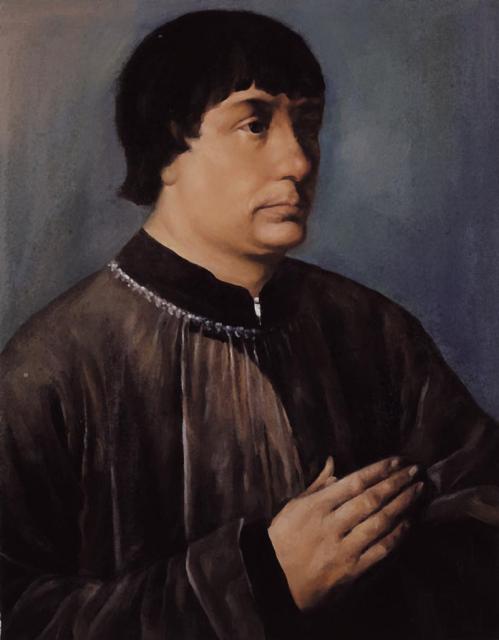
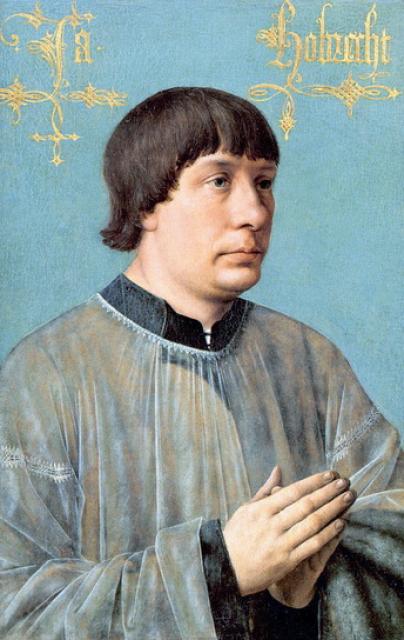
Jacob Obrecht, a Flemish composer, was the most renowned composer of masses in Europe in the late 15th century. Only Josquin des Prez, a leading representative of the Franco-Flemish polyphonic school, surpassed him after his death. Little is known about Obrecht's origins and early childhood, except for what is mentioned in his motet 'Mille quingentis'. Jacob was the only son of Willem, a town trumpeter. His mother died in 1460 at the age of 20, and his father in 1488 in Ghent. It is likely that Obrecht learned to play the trumpet, like his father, and studied polyphony, as well as learned to improvise with the cantus firmus, the basis of polyphonic composition. Obrecht appears to have been acquainted with the French composer Antoine Busnois and was close to the Burgundian court. Stylistic parallels with the elder composer can be found in one of Obrecht's early masses, suggesting his familiarity with Busnois' work. Jacob was highly esteemed by his patrons and composer colleagues. For example, Johannes Tinctoris, whose scholarly career flourished in Naples, included Obrecht's name in the list of contemporary master composers, a great honor considering Obrecht was only 25 years old at the time the list was compiled. It is also known that around 1476, one of the members of Obrecht's choir was the "Prince of Humanists," Erasmus.
A Life of Many Roles
Jacob held various positions throughout his life, most of which were in Flanders and the Netherlands. However, he made at least two trips to Italy. The first was in 1487, at the invitation of Ercole d'Este I, the Duke of Ferrara, who heard Obrecht's music, which was known to be circulated in Italy between 1484 and 1487. The Duke declared that he esteemed Obrecht's music above that of all other contemporary composers and invited him to Ferrara for six months in 1487. Obrecht returned to Ferrara in 1504, but the Duke's death early the following year left the composer without the position of chapel master. The exact capacity in which Jacob remained in Ferrara is unknown, but records indicate that he died there, falling victim to the plague shortly before August 1, 1505.
A Prolific Composer
Throughout his life, Obrecht primarily composed religious music, including masses and motets, and also became the author of several secular songs. By combining contemporary and archaic elements, Jacob approached the style of "multidimensional music." His style serves as a vivid example of the contrapuntal extravagance of the late 15th century. In his masses, Obrecht often employed the technique of creating entire musical works based on a single melody in one of the voices. In other cases, the composer divided the source material into short phrases or used retrograde versions of complete melodies or melodic fragments. Twenty-eight masses, about thirty motets, and a few non-religious songs have survived to the present day. Obrecht was able to develop his polyphonic technique to the limits of possibility, drawing on the fruits of his predecessors, including Antoine Busnois and, according to some researchers, Josquin des Prez and Johannes Ockeghem. Striving to approach the ideal of "angelic" harmony, Obrecht always adhered to the rules of the "strict style," unlike Josquin des Prez, for example.
An Unsung Influence
Although Obrecht was famous in his time, it seems that he did not have a significant influence on subsequent generations. More likely, the composer simply went out of fashion, along with other polyphony masters of his time.