Carl Piper
 Sweden
- Early Life and Career
- Rise to Prominence
- King's Right-Hand Man
- Northern War and Capture
- Decline and Imprisonment
- Captivity and Legacy
- Personal Life and Legacy
Early Life and Career
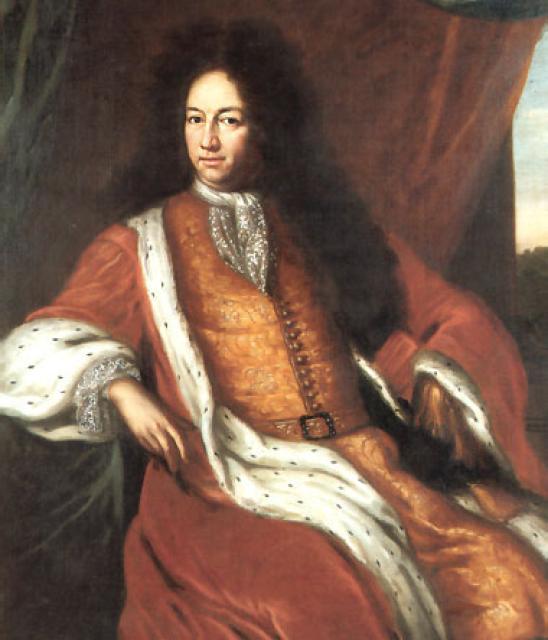
Karl Piper, a Swedish statesman, was born on 29 July 1647, in Stockholm, Sweden, to Karl Piper and Ingrid Charlotte Ekenbom. He studied for six years at Uppsala University and joined the royal Chancellery in 1668. From 1673 to 1674, he served in Gustav Oxenstierna's embassy to Russia.
Rise to Prominence
During the Scanian War, Piper worked in the campaign chancellery and caught the attention of King Charles XI. In 1677, he became registrar in the Great Chancellery. In 1679, he gained noble status and was appointed secretary in the Chamber College. This position required significant authority and workload due to the ongoing reduction.
King's Right-Hand Man
In 1689, Piper was appointed chancellor and state secretary, becoming the king's trusted advisor on domestic affairs. After Charles XI's death, King Charles XII continued to favor him. In 1697, he was named royal privy councilor, and a year later, he received both baron and count titles.
Northern War and Capture
With the outbreak of the Great Northern War, Piper led the campaign chancellery that accompanied King Charles XII. As a senior advisor, he negotiated with Polish magnates and foreign representatives. In 1702, he became chancellor of Uppsala University, and in 1705, he was appointed supreme marshal. He retained his position as privy councilor throughout.
Decline and Imprisonment
While Piper oversaw both foreign and domestic affairs early in Charles XII's reign, the king increasingly made decisions without his knowledge. He opposed the campaigns into Poland and Ukraine but failed to prevent them. Piper's closeness to the king attracted envy, including from Field Marshal Rehnschild, one of Charles XII's most capable commanders. In 1709, at the Battle of Poltava, he was taken prisoner by Russian forces.
Captivity and Legacy
Piper was initially taken to Kiev but later participated in Peter I's triumphal parade in Moscow. Imprisoned mainly in Moscow, he helped captive Swedish countrymen alongside Rehnschild, despite their past animosity. In 1715, Piper was transferred to Schlüsselburg, where he passed away on 29 May 1716. His body was returned to Sweden in 1718 and buried in the church of Enköping in Västmanland.
Personal Life and Legacy
Piper married Christina Törnflycht in 1690. While in captivity in Moscow, he kept a diary, which was published with some of his letters in "Historiska handlingar" in 1906 and 1911.