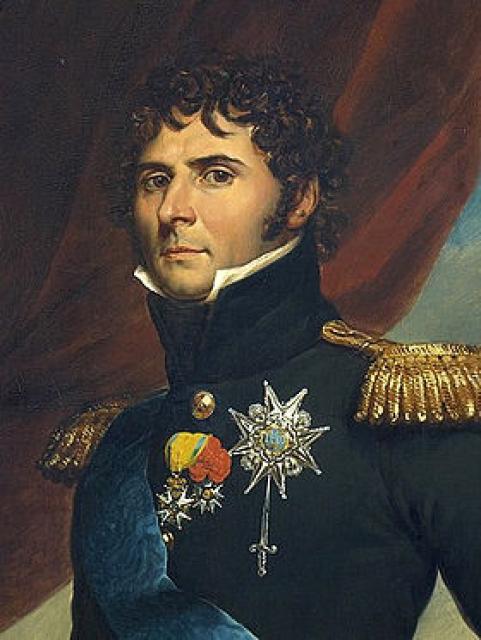
Carl XIV Uhan
 Sweden
- Early Life and Military Career
- Rivalry with Napoleon
- Rise to Swedish Throne
- Regency and Diplomatic Triumphs
- Acquisition of Norway
- Reign as King and Legacy
Early Life and Military Career
Jean Baptiste Bernadotte, the founder of the Bernadotte dynasty, was born the son of a lawyer. He rose to prominence during the French Revolutionary Wars, commanding a division and later a corps under Napoleon. In 1798, he married Désirée Clary, Napoleon's former fiancée. In 1799, he served briefly as Minister of War.
Rivalry with Napoleon
Initially friendly with Napoleon, Bernadotte's relationship with the emperor soured due to his growing military success and suspected republican sympathies. Despite refusing to support Napoleon's overthrow of the Directory, Bernadotte also declined to defend it. Napoleon attempted to send him on a diplomatic mission to the United States, but with war looming with England, Bernadotte remained in Paris. When Napoleon proclaimed himself emperor, Bernadotte declared his loyalty and was made a marshal. However, his role in subsequent wars was minor, as political suspicions continued to overshadow him.
Rise to Swedish Throne
Bernadotte's popularity in Sweden grew after he liberated captured Swedish prisoners in the Netherlands. Unexpectedly, his prospects changed when Napoleon dismissed him in 1810. The Riksdag of Sweden elected him heir to the throne, which was then occupied by the elderly and childless King Karl XIII. After the chosen heir, Danish Prince Christian August, died unexpectedly, Bernadotte converted to Lutheranism and arrived in Sweden, where he was adopted by the king and took the new name Karl Johan.
Regency and Diplomatic Triumphs
Formally appointed Regent to the King, Bernadotte displayed remarkable diplomatic skills. Despite being formally at war with England due to pressure from Napoleon, Sweden managed to avoid hostile action for two years. When Napoleon occupied Swedish Pomerania, Karl Johan forged alliances with Russia, Great Britain, and Prussia. He maintained amicable relations with Russia (despite Swedish desires to acquire Finland from them) and secured support from his new allies in a war against Denmark for the annexation of Norway.
Acquisition of Norway
After Swedish participation in the Battle of Leipzig (October 1813), which culminated in Napoleon's defeat, Bernadotte's swift military campaign forced the King of Denmark to sign the Treaty of Kiel, which ceded Norway to Swedish rule. However, the Norwegians refused to recognize the treaty and adopted their own constitution. Although force could have been used to impose their will, troops were sent over and the campaign was largely bloodless. Karl Johan insisted on resolving the issue by preserving the Norwegian constitution in exchange for acknowledging Swedish authority.
Reign as King and Legacy
At the Congress of Vienna in 1815, Austria and the restored French Bourbons opposed the consolidation of the new royal dynasty in Europe. However, thanks to Russian and British support, Bernadotte's opponents failed to undermine his position. Following the death of Karl XIII, the former republican general ascended to the throne of Sweden and Norway. He pursued a conservative policy based on good relations with Russia and England, ensuring peace and prosperity for his country. The Bernadotte dynasty continues to reign in Sweden to this day.