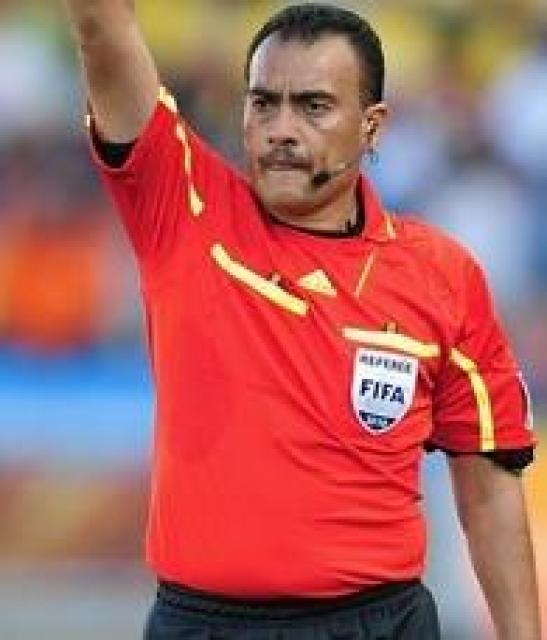
Carlos Batres
 Guatemala
- From Guatemala to the International Stage
- The World Cup Setback and Return
- Referee Development and Legacy
Carlos Batres built a career in one of football’s most demanding roles: making split-second decisions under the eyes of players, coaches and millions of viewers. The Guatemalan referee rose from domestic matches to the FIFA World Cup, officiating at five games across the 2002 and 2010 tournaments. His path included a setback that kept him away from the 2006 World Cup, but he returned to the sport’s biggest stage four years later and later moved into referee development.
From Guatemala to the International Stage
Carlos Alberto Batres González was born in Guatemala City on 2 April 1968. He earned a degree in science and became involved in football officiating in Guatemala. His first international match was a 1996 World Cup qualifier between Panama and Canada. He went on to referee across CONCACAF competitions, including Gold Cups, the Confederations Cup and Olympic football.
His first World Cup came in 2002 in South Korea and Japan. Batres handled the group match between Denmark and Senegal, then the round-of-16 game between Germany and Paraguay. Germany won the latter 1–0 with a late goal, and Paraguay’s captain José Luis Chilavert publicly accused Batres of missing penalty calls. Roberto Acuña was sent off in stoppage time. The match remained a sore point among some Paraguayan supporters, and Batres’s appointment to referee Paraguay again in 2010 revived those complaints.
The World Cup Setback and Return
Batres was not selected for the 2006 tournament after failing FIFA’s physical tests. He later returned to the World Cup in South Africa in 2010, where he refereed Algeria–Slovenia and Italy–New Zealand in the group stage before being assigned to the quarter-final between Paraguay and Spain.
The Paraguay–Spain match became one of the tournament’s most tense games. Batres awarded a penalty to Paraguay, saved by Iker Casillas, and then awarded Spain a penalty soon afterward. Xabi Alonso scored from the spot, but Batres ordered a retake because players had entered the area early; Casillas saved Alonso’s second attempt. Spain eventually won 1–0. Paraguay’s coach Gerardo Martino criticized Batres’s decisions afterward and said FIFA had not offered the apology he expected. The episode highlighted how a referee’s work can become part of a match’s public story, even when interpretations of individual calls remain contested.
Beyond the World Cup, Batres’s assignments included the 2004 Olympic football tournament and the 2006 FIFA Club World Cup final, in which Internacional of Brazil defeated Barcelona. By the time he retired from active refereeing in 2010, he had officiated at two senior World Cups and accumulated a long record across club and international competitions.
Referee Development and Legacy
After retiring, Batres remained involved in the game. He served on refereeing bodies within FIFA, CONCACAF and UNCAF, and later worked as a referee coordinator for the Costa Rican Football Federation. His role focused on reviewing the country’s refereeing structure, identifying promising officials and improving their preparation. He has also advised referees and discussed the state of officiating in Guatemala in public interviews.
Batres’s career helped raise the profile of Guatemalan officials in international football. He remains the country’s only referee to have taken charge of five matches across two senior FIFA World Cups. His legacy includes both the scale of those appointments and the scrutiny that comes with the job: on the biggest stage, decisions are replayed, debated and remembered long after the final whistle.