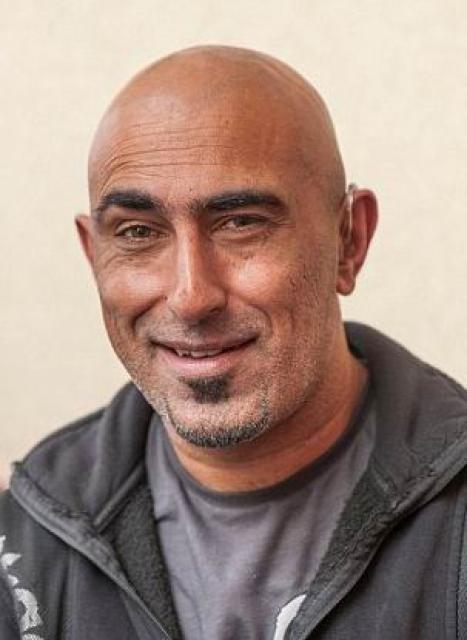
Carole King
 Great Britain
- The Struggle with CML and the Hope of Ponatinib
- Geographical Lottery and Ineffective Alternatives
- Arguments of 'Non-Exceptional' Circumstances
- Personal Impact and Frustration
- Pulmonar Hypertension: An Insurmountable Barrier
- Access Restrictions in England
- Public Outcry and Expert Opinions
- Yunus's Dilemma and Future Outlook
British Man Diagnosed with Chronic Myeloid Leukemia Denied Life-Saving Drug
Khalis Yunus, a British citizen, is facing a grave threat to his life due to a rare form of leukemia known as chronic myeloid leukemia (CML). His life-saving treatment is readily available in neighboring countries but remains inaccessible to him in England due to a bizarre logic from medical authorities and geographical restrictions.
The Struggle with CML and the Hope of Ponatinib
Yunus's 43-year battle with CML had led him to accept the inevitability of his demise until he learned about a new drug, Ponatinib, that could potentially cure his cancer. His elation was short-lived as the National Health Service (NHS) denied him access to the medication, citing questionable reasons.
Geographical Lottery and Ineffective Alternatives
Ponatinib, a highly effective treatment for CML, is not a rare commodity. It is widely available in several countries. Ironically, and due to incomprehensible decisions by healthcare officials, it is accessible in Scotland and Wales but remains off-limits to English patients.
Even though Ponatinib is the only truly effective therapy for CML, which affects approximately 700 people in the UK annually, the NHS has refused to reconsider its stance. Yunus's condition has progressed to the point where other available treatments have become ineffective. A stem cell transplant, a standard treatment for severe leukemia, is also not an option due to his lung complications. Ponatinib remains his last hope, but it is tantalizingly close yet unattainable.
Arguments of 'Non-Exceptional' Circumstances
Yunus argues that he has been denied the medication based on his "non-exceptional" circumstances. He finds this reasoning absurd, as every individual is unique. Despite its illogicality, this argument is the one he must contend with.
Personal Impact and Frustration
Yunus remains determined to find a way to access Ponatinib. He has considered relocating to Wales, but the complexities are considerable. His primary concern lies not only with himself but also with his family, who have been unfairly burdened by these circumstances. The constant uncertainty and fatigue are taking a toll on his loved ones.
Pulmonar Hypertension: An Insurmountable Barrier
Theoretically, a stem cell transplant could save Yunus's life, as it is a standard treatment for advanced cases of leukemia. However, Yunus suffers from pulmonary hypertension, a condition that raises blood pressure in the arteries leading to the lungs. This complication makes him ineligible for a transplant. While Ponatinib would not be hindered by this condition, bureaucracy can often be just as formidable an obstacle as any disease.
Access Restrictions in England
In theory, Ponatinib is available in England, but only to a select few. In a bizarre twist of local medical policy, the drug that is unrestricted in Scotland and Wales is only provided to English patients who have a rare mutation known as T315I. This mutation affects 2-20% of CML patients, and Yunus is not among them.
Those without the mutation must apply to the NHS England Cancer Drugs Fund, but not all applications are approved. This issue has been dubbed the "postcode lottery" problem in the UK, and has drawn widespread criticism from healthcare professionals who are bound by rules that prohibit them from breaking the law. The case of Ponatinib is particularly egregious, as it is widely acknowledged across Europe as "highly beneficial for chronic myeloid leukemia." The disconnect between theory and practice is infuriating for Yunus and his loved ones, but it has not swayed the NHS's decision.
Public Outcry and Expert Opinions
Kris Griffin, a prominent advocate for CML patients, commented on the situation. He founded an organization dedicated to raising awareness about leukemia drug availability and has led public campaigns. He described Yunus's case as typical, and the most harrowing aspect is that Ponatinib is known to be effective, even in advanced stages of the disease. Griffin argues that the "non-exceptional" reasoning is even more inappropriate in this context, as Yunus's life is at stake.
Professor Mhairi Copland of the University of Glasgow echoed similar sentiments, stating in the 'British Journal of Family Medicine' that drugs like Ponatinib should be equally accessible to all CML patients, regardless of their geographical location.
The NHS has acknowledged the situation as regrettable, but stated that it is working on a new system for delivering cancer drugs that will theoretically provide more equitable access. Price negotiations are also underway, but these measures remain in the exploratory stage while Yunus's need for treatment is urgent.
Yunus's Dilemma and Future Outlook
Yunus's next move remains uncertain, but his concern extends beyond his own well-being to the plight of other patients. Whether he will be able to find a way to secure Ponatinib not only for himself but also for others is yet to be determined.