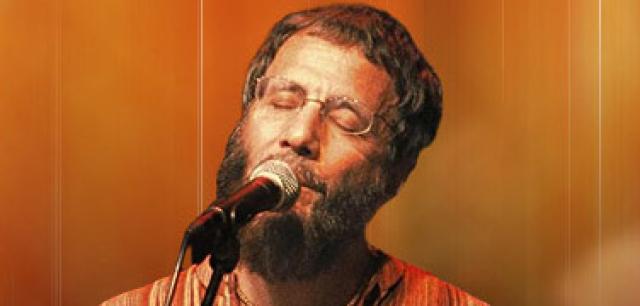
Cat Stevens (Yusuf Islam)
 Great Britain
- London beginnings and an early hit
- The songs of a generation
- A new name and a different life
- Returning to music
- A journey still unfolding
Known first to the world as Cat Stevens and later as Yusuf Islam, Steven Demetre Georgiou has made a career of following his conscience. His warm, searching songs turned him into one of the most distinctive singer-songwriters of the 1970s. At the height of that success, he embraced Islam and stepped away from pop stardom for decades. His eventual return brought old favorites to new audiences and added fresh chapters to a career that has always asked where the road leads next.
London beginnings and an early hit
Georgiou was born in London on 21 July 1948 to a Greek-Cypriot father and a Swedish mother. His parents ran a restaurant near the West End, and he grew up around the city’s theatres and music. He studied art and began writing songs as a teenager, adopting the stage name Cat Stevens when he entered the music business.
His debut album, “Matthew and Son,” arrived in 1967. The title track became a major British hit, and “The First Cut Is the Deepest,” written by Stevens, soon established him as a songwriter whose work could travel far beyond his own recordings. Early success made him a pop star while he was still very young, but illness interrupted his momentum. He contracted tuberculosis in 1968 and spent months recovering, a period that gave him time to reconsider both his life and the kind of music he wanted to make.
The songs of a generation
After his recovery, Stevens returned with a more personal sound. Albums such as “Mona Bone Jakon,” “Tea for the Tillerman” and “Teaser and the Firecat” helped define his most celebrated period. He paired intimate acoustic arrangements with melodies that felt immediately familiar, while his lyrics explored family, love, faith and the search for meaning.
Songs including “Father and Son,” “Wild World,” “Moonshadow,” “Morning Has Broken” and “Peace Train” became enduring standards. His music also found a distinctive home in the 1971 film “Harold and Maude,” whose soundtrack introduced his songs to another generation of listeners. Stevens became known for a voice that could sound both conversational and quietly anthemic, inviting the audience into a personal reflection rather than simply delivering a hit.
A new name and a different life
In 1976, a near-drowning experience led Stevens to reflect more intensely on spirituality. He studied several religious traditions, and in 1977 he embraced Islam. The following year he took the name Yusuf Islam, choosing Yusuf, the Arabic form of Joseph. In 1979, after releasing “Back to Earth,” he withdrew from the commercial pop world and devoted more attention to faith, family, education and charitable work.
For many fans, his departure was as striking as his rise. Yusuf produced educational recordings and supported humanitarian projects, while keeping his distance from the celebrity machinery that had once surrounded him. His choice did not erase the music he had made as Cat Stevens; it changed the terms on which he was willing to return to it.
Returning to music
Yusuf gradually resumed recording and performing, releasing “An Other Cup” in 2006, his first new pop album in many years. He began appearing publicly as Yusuf, and later as Yusuf/Cat Stevens, bringing together the name associated with his spiritual life and the one attached to his most familiar songs. His performances of “Peace Train” and other classics carried the weight of that long journey.
In 2014, he was inducted into the Rock & Roll Hall of Fame. He later joined the Songwriters Hall of Fame, recognition that honored not only his singing but the craft behind songs recorded by many other artists. Albums including “The Laughing Apple” and “King of a Land” showed that he remained active as a songwriter decades after his breakthrough.
A journey still unfolding
Yusuf/Cat Stevens’s legacy rests on the rare combination of a catalog that became part of popular culture and a life that took a different direction from the usual story of celebrity. His songs continue to resonate because they are direct without being simple, personal without losing sight of the wider world.
From the young London songwriter behind “Matthew and Son” to the spiritual artist who returned to the stage on his own terms, he has kept music connected to questions of identity, purpose and peace.


