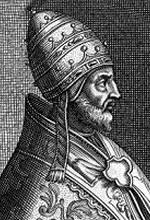
Celestine IV
Celestine IV was pope for only seventeen days in 1241, during a bitter struggle between the papacy and Emperor Frederick II. His brief reign followed one of the most turbulent papal elections of the Middle Ages and ended before he could leave a substantial mark on Church policy.
A churchman from Milan
Born Goffredo da Castiglione, Celestine came from Milan and built his career in the Church. He served as archpriest of the city’s cathedral and held senior administrative roles. Pope Gregory IX made him a cardinal, including appointing him cardinal bishop of Sabina.
When Gregory IX died in August 1241, the papacy was embroiled in conflict with Frederick II. The emperor’s forces had captured several cardinals who were traveling to Rome, leaving only a small number available to choose a successor. Roman authorities confined the cardinals in the Septizonium, an ancient and deteriorating palace, in an effort to force a decision. After weeks of disagreement and harsh conditions, they elected Goffredo on 25 October. He took the name Celestine IV.
A papacy cut short
Celestine’s election did little to ease the political crisis. His authority was challenged by the wider conflict between Frederick II and the papacy, and the cardinals who had been absent from the election did not all accept its circumstances. The new pope had little time to respond: he died in Rome on 10 November 1241, just over two weeks after his election.
The coercive seclusion of the electors in 1241 became an important precedent in the history of papal elections, though the formal rules for conclaves were established later. Celestine IV is therefore remembered less for a program of his own than for occupying the papal office at a moment when political pressure, factional division, and the question of free election were reshaping the Church.