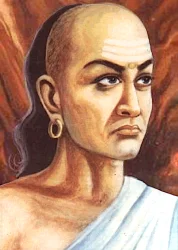
Chanakya
Chanakya, also called Kautilya or Vishnugupta, is remembered in Indian tradition as a scholar and political strategist who helped Chandragupta Maurya establish the Mauryan Empire in the fourth century BCE. He is traditionally credited with the *Arthaśāstra*, a wide-ranging treatise on government, diplomacy, economics, and military strategy. The details of his life remain uncertain, since much of the biography comes from later literary and religious accounts.
Traditional accounts and rise
Later sources portray Chanakya as a Brahmin scholar who opposed the Nanda rulers of Magadha and became an adviser to Chandragupta. In popular narratives, he recognized the young Chandragupta’s potential, trained him, and helped organize the campaign that displaced the Nanda dynasty around 321 BCE. Stories describe Chanakya as a master of political strategy who used alliances, intelligence, and calculated force to secure the new ruler’s position.
These accounts are influential, but they were written well after the events they describe. There is no surviving contemporary biography of Chanakya, and historians cannot confirm many dramatic episodes associated with his rise. The core tradition connects him with the formation of the Mauryan state, while the specifics belong partly to later legend.
The Arthaśāstra
The *Arthaśāstra* is traditionally attributed to Kautilya, identified with Chanakya. It discusses the responsibilities of a ruler, taxation, administration, law, diplomacy, espionage, military organization, and the management of resources. Its practical tone has made it one of the most important works of ancient Indian political thought.
The relationship between the text and the historical Chanakya is debated. Scholars have questioned whether the work was written by a single author in the Mauryan period or developed over time before reaching its surviving form. The text was rediscovered in manuscript form in the early twentieth century and published by R. Shamasastry, prompting renewed study of its ideas and dating.
Legacy
Chanakya’s reputation grew through Sanskrit plays, Jain writings, political collections, and later educational traditions. The drama *Mudrārākṣasa*, for example, turns the establishment of Chandragupta’s rule into a contest of political intelligence. Popular sayings and later manuals also circulated under the name Chanakya, though their attribution is often uncertain.
Today he is frequently presented as a founder of Indian statecraft and compared with political thinkers from other traditions. His historical identity cannot be separated neatly from the stories built around him, but the enduring association with the Mauryan Empire and the *Arthaśāstra* has made Chanakya a defining figure in the history of South Asian political ideas.