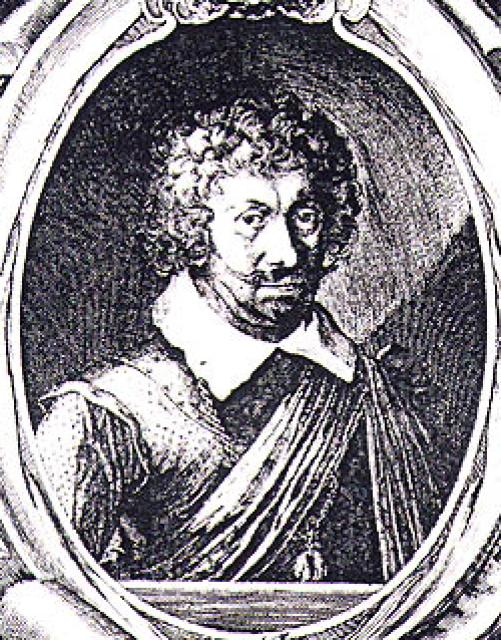
Charles-Bonaventure de Longueval
 Spain
Spain- Early Life and Military Career in the Netherlands
- Diplomacy and the Siege of Ostend
- Marriage and Diplomatic Mission
- Service in the Thirty Years' War
- Death and Legacy
Early Life and Military Career in the Netherlands
Ambroise de Bournonville was born on August 22, 1618 in Arras, belonging to a noble Flemish family. His father served the Governor-General of the Spanish Netherlands, Alexander Farnese, Duke of Parma.
Ambroise embarked on a military path, serving in the Netherlands and participating in the capture of Calais and Ardres in 1596. During the Siege of Emmerich, he was taken captive by the Dutch but was soon released after paying a ransom. He then fought at the Battle of Nieuwpoort in 1600, earning the rank of general-quartermaster and later field marshal in 1602.
Diplomacy and the Siege of Ostend
In 1603, Ambroise was placed under the command of General Ambrogio Spinola. He played a pivotal role in the capture of Ostend in 1604, ending a three-year siege.
Marriage and Diplomatic Mission
In 1606, Ambroise married Marie Magdalene, Countess of Biglia, with whom he had a son, Charles-Albert de Longueval, who would later become a general-captain. After the assassination of King Henry IV of France in 1610, Ambroise was sent to Paris on a diplomatic mission to convey condolences from the rulers of the Spanish Netherlands, Archduke Albert and Archduchess Isabella Clara Eugenia.
Service in the Thirty Years' War
With the outbreak of the Bohemian Revolt in 1618, Ambroise joined the army of Emperor Matthias. On August 22, 1618, he was appointed field marshal of the Imperial army.
In the fall of 1618, Ambroise invaded Bohemia but was forced to retreat by Thurn and Mansfeld. He took refuge in Budweis. On May 15, 1619, he was named general-oberst-leutnant of the Imperial army and defeated Mansfeld at the Battle of Sablat, lifting the siege of Budweis.
After facing setbacks from Thurn and Bethlen Gabor, Ambroise returned to defend Vienna in 1619. He prevented the Protestant army from crossing the Danube and raised a new army, inflicting further defeats on the Czechs at Cisterndorf.
In the 1620 campaign, Ambroise handed over the role of general-oberst-leutnant to Ambrogio Spinola and was appointed general-oberst der kavalerie. He fought alongside the Catholic League army led by Maximilian I of Bavaria and Johann Tserclaes, Count of Tilly, contributing to the Protestant defeat at the Battle of White Mountain.
Death and Legacy
Despite considering retirement, Emperor Ferdinand II convinced Ambroise to stay in service and granted him confiscated Bohemian estates and the title Count of Gratzen.
In the 1621 campaign, Ambroise defeated Bethlen Gabor, captured Pressburg on May 7, and besieged Neuhäusel. However, he was killed on July 10, 1621, during the siege. His death was immortalized in a portrait by the Flemish painter Peter Paul Rubens.


