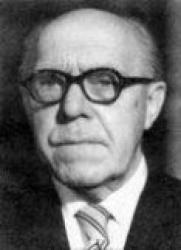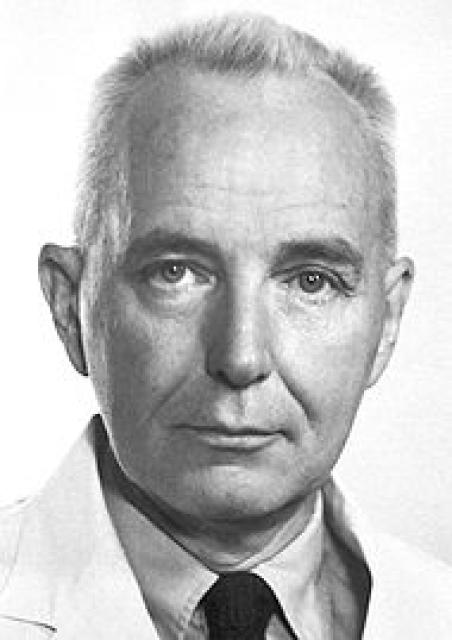
Charles Brenton Huggins
 USA
USA- Early Life and Education
- Surgical Training and Early Research
- Groundbreaking Discoveries in Prostate Cancer
- Nobel Prize and Subsequent Research
- Legacy and Impact
Early Life and Education
Charles Brenton Huggins, a renowned surgeon and oncologist, was born in Halifax, Canada, on September 22, 1901. He earned his undergraduate degree from Acadia University in 1920 and went on to pursue a medical degree at Harvard Medical School, graduating in 1924.
Surgical Training and Early Research
After completing his medical degree, Huggins served as a surgical intern at the University of Michigan Hospital. In 1926, he joined the faculty of the University of Michigan Medical School as an instructor in surgery. In 1927, he moved to the newly established University of Chicago Medical School in the same role. His interest in urology led him to specialize in this field.
To enhance his surgical skills, Huggins traveled to the Lister Institute in London in 1930 and subsequently worked in Germany under the guidance of Otto Warburg, who had discovered that tumor cells rely on anaerobic glycolysis for energy. Their collaboration sparked a lifelong friendship.
Groundbreaking Discoveries in Prostate Cancer
Upon his return to the University of Chicago in 1931, Huggins and his colleagues developed an experimental method for transforming normal connective tissue cells into tumor cells. However, his focus soon shifted to diseases of the male genitourinary system, particularly the prostate gland.
In 1939, Huggins's team successfully isolated the prostate gland in dogs, the only animals apart from humans that develop prostate cancer. By analyzing the gland's secretions and chemical composition under different hormonal conditions, they discovered that testosterone promoted its growth and secretory activity, while estrogens inhibited it.
These findings had profound implications for the treatment of prostate cancer, a prevalent disease among men over 50. Huggins and his collaborators published several papers in 1941 demonstrating that testosterone therapy could accelerate tumor growth and metastasis, while estrogens and castration often suppressed them.
Nobel Prize and Subsequent Research
Huggins's work earned him international recognition. In 1966, he was awarded the Nobel Prize in Physiology or Medicine, jointly with Peyton Rous, "for their discoveries concerning hormonal treatment of prostatic cancer."
He continued to investigate the role of hormones in cancer development, particularly in breast cancer. In the 1950s, Huggins and his team demonstrated that adrenalectomy and ovariectomy could lead to clinical improvement in patients with advanced breast cancer.
Legacy and Impact
Huggins's discoveries changed the landscape of cancer treatment. The hormonal approach he pioneered has benefited countless patients worldwide. He retired from the University of Chicago in 1969 and became the president of Acadia University in 1972.
Huggins died in Chicago on January 12, 1997, at the age of 95. His pioneering work remains a testament to his brilliance and dedication to the fight against cancer.