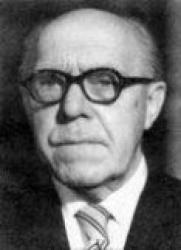
Vera Gedroyts
 Ukraine
- Biography of Vera Gedroits
- Education and Early Career
- Medical Career and War Heroism
- Recognition and Later Life
- Later Years and Legacy
Biography of Vera Gedroits
Vera Ignatievna Gedroits was born in 1870 in the village of Slobodishche, Bryansk District, Oryol Province. She belonged to the famous Lithuanian noble family of Gedroits.
Education and Early Career
Gedroits initially studied at the Bryansk Progymnasium, where one of her teachers was the later famous V. V. Rozanov. She then attended a gymnasium in Orel, from which she was expelled for a satirical poem. In St. Petersburg, Gedroits attended lectures at the medical courses of P.F. Lesgaft. She also joined a revolutionary student circle, which caught the attention of the police, resulting in her exile to her father's estate under police surveillance in 1892. In 1894, she entered into a fictitious marriage with Nikolai Belozerov and fled abroad to Switzerland with a new passport. There, she enrolled in the medical faculty of the University of Lausanne and graduated with a degree in medicine and surgery in 1898. Gedroits studied under the renowned surgeon Cesare Rou and worked as his assistant for several years before becoming a private lecturer.
Medical Career and War Heroism
In 1900, Gedroits returned to Russia due to her parents' illness and her sister's death. She confirmed her diploma in 1902 by passing the examination at Moscow University and obtained a position as a surgeon at the Mal'tsovsky Cement Plant Hospital in the Kaluga Province. Just three years later, she became the chief physician of the district Lyudinov Hospital. Gedroits actively performed surgeries, participated in the work of medical societies, and published her work in Russian and international scientific journals. She expanded and equipped the small hospital, turning it into a multi-profile surgical center, the first of its kind in provincial Russia.
During the Russo-Japanese War in 1905, Gedroits voluntarily went to the front as a surgeon in the Red Cross sanitary train. She became one of the first surgeons in medical history to perform independently developed abdominal operations in field conditions, operating on hundreds of patients. Previously, soldiers with abdominal wounds were left to die, as such wounds were considered incurable. For her work and bravery, she was awarded the Golden Medal "For Diligence" on the Annensky Ribbon. Following the battles at Mukden, she received the Silver Medal "For Bravery" on the Georgievsky Ribbon personally from General N.P. Linevich, the army commander. Empress Alexandra Feodorovna, who was involved in caring for the wounded in Manchuria, awarded Gedroits three Red Cross honors "for assisting in alleviating the fate of sick and wounded military personnel and for her efforts on behalf of the Russian Red Cross Society."
Recognition and Later Life
On July 27, 1905, Gedroits presented the results of her work to the Society of Military Doctors, making important conclusions for military medicine. Her name became widely known throughout the country as a female surgeon and war hero. After the war, she returned to Bryansk. In 1909, she accepted an invitation from Empress Alexandra Feodorovna to become the senior resident at Tsarskoye Selo Palace Hospital. This appointment was met with resistance from the hospital's director, but he was forced to comply with the imperial will. Gedroits became close to the imperial family and served as the personal physician to the children of the Tsar. Her relationship with Grigori Rasputin and Anna Vyrubova was tense.
While in Tsarskoye Selo, Gedroits met N. S. Gumilev, R. V. Ivanov-Razumnik, A. M. Remizov, and reconnected with V. V. Rozanov. Later, she also met S. A. Yesenin. Starting from 1910, Gedroits began writing under the pseudonym Sergei Gedroits. Her first book, a collection of poems and tales, received negative reviews from N. S. Gumilev and S. M. Gorodetsky. However, she soon participated in the activities of the "Poets' Guild" led by Gumilev and published her poetry book "Veg" (1913) under the auspices of the guild. Her writings appeared in various journals, such as "Hyperborea," "Zavety," "Novy Zhurnal Dlya Vsekh," "Vestnik Teosofii," and "Sovremennik." In 1912, she defended her doctoral dissertation on "Long-term Results of Ru's Method for Inguinal Hernia Operations Based on 268 Operations" at Moscow University. In 1914, she published the book "Conversations on Surgery for Nurses and Doctors," summarizing her experience during the Russo-Japanese War.
During the outbreak of World War I in 1914, Gedroits was serving as the chief physician. She reorganized the Tsarskoye Selo Hospital to accommodate the wounded. The scale of surgical work increased significantly. Gedroits trained Empress Alexandra Feodorovna and her daughters, Olga and Tatiana, as nursing sisters, who then assisted her in surgeries as regular surgical sisters. In 1915, she was entrusted with the treatment of A. A. Vyrubova, who suffered severe injuries in a train accident. According to A. I. Spiridovich's memoirs, "Gedroits was highly regarded by the Empress, but her reputation as a doctor was not so good. Later, when Vyrubova became crippled for life - she limped - she and many others blamed it solely on Mrs. Gedroits."
After the February Revolution, Gedroits faced pressure as an associate of the imperial family and was forced to leave Tsarskoye Selo. In May 1917, she went to the front, where she became the chief physician of a dressing station in the 6th Siberian Rifle Division and later a corps surgeon. In January 1918, she was wounded and evacuated to Kiev, where she worked in a children's clinic after recovery. From 1919, she actively worked in the surgical services of Kiev, organizing, among other things, a clinic for maxillofacial surgery.
In 1921, she joined the faculty surgical clinic of the Kiev Medical Institute by invitation of Professor E.G. Chernyakhovsky. As a private lecturer, she lectured on pediatric surgery in Kiev for the first time. Gedroits published articles in medical journals on general and pediatric surgery, cardiovascular surgery, oncology, and endocrinology. She participated in surgical congresses and wrote textbooks. In 1923, she was elected a professor of medicine. She was described by V.A. Oppel as a "true surgeon, skilled with a knife," and she wrote a textbook on pediatric surgery. In 1929, Gedroits was appointed as the head of the faculty surgical department.
In 1930, during the purges and arrests targeting the scientific intelligentsia, known as the "SVU process," she was dismissed from the university without pension rights.
Later Years and Legacy
Vera Ignatievna purchased a house in the outskirts of Kiev and largely ceased her surgical activities, focusing on writing. She planned to publish a series of semi-autobiographical novels under the collective title "Life." Three of them, "Kaftanchik" (1930), "Lyakh" (1931), and "Otryv" (published posthumously), were released by the publishing house.
In her final years, Gedroits lived in Kiev with Countess Maria Dmitrievna Nyrod (1879-1965), whom she was in a de facto marriage with. Maria Dmitrievna was acquainted with Vera Ignatievna since their time at Tsarskoye Selo Hospital, where she worked as a nurse.
Gedroits died of cancer in 1932 and was buried in Kiev at the Spaso-Preobrazhenskoe (now Korchovatskoe) Cemetery. Her modest grave is located within the same enclosure as the tomb of Archbishop Hermogenes and his relative, who was rescued by Gedroits. Before her death, Gedroits entrusted her archives to her friends, the artist I.D. Avdieva and her husband L.S. Povolotsky. Among the archives was a letter from Professor Cesare Rou, in which he bequeathed his chair of surgery at the University of Geneva to her, a Russian surgeon. In the 1930s, L.S. Povolotsky was arrested on charges of espionage and killed, and the letter was lost.
Vera Gedroits, known as a surgeon and poet, who maintained "masculine" habits in dress and lifestyle, left a colorful impression and is depicted in many memoirs, including Georgy Ivanov's fictionalized memoir "Petersburg Winters."
In honor of Vera Gedroits, a hospital in the town of Fokino, Bryansk Region, where she began her medical career, was named after her.