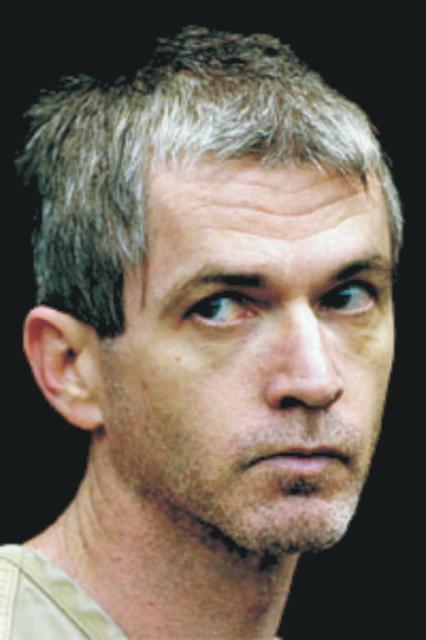
Charles Edmund Cullen
 USA
USA- Serial Killer from New Jersey
- Military Service and Psychological Instability
- First Kill and Continuation of Murderous Acts
- Troubled Personal Life and Continued Murders
- Continued Murders and Arrest
- Conviction and Impact
Serial Killer from New Jersey
Charles Edmund Cullen, the youngest of eight children, was born on February 22, 1960, in West Orange, New Jersey. His father, a 58-year-old bus driver, passed away when Charles was only seven months old. According to Charles, he had an unhappy childhood. At the age of nine, he attempted suicide by drinking chemicals, marking the first of his twenty suicide attempts. Eventually, while working as a nurse, Cullen resorted to stealing drugs in an attempt to end his own life.
Military Service and Psychological Instability
On April 6, 1978, devastated by his mother's death in a car accident, for which his sister was responsible, Charles dropped out of school and joined the U.S. Navy. He was assigned to a submarine and achieved the rank of Petty Officer Third Class as a member of the crew of the USS Woodrow Wilson. It was during this time that Cullen displayed signs of mental instability. He once stole a medical coat, surgical mask, and rubber gloves from the ship's medical cabinet. Over the course of his service, he attempted suicide seven times. Cullen was discharged on March 30, 1984, due to health issues.
First Kill and Continuation of Murderous Acts
Cullen committed his first murder on July 11, 1988. After Judge John W. Yengo Sr. was brought to St. Barnabas Medical Center with an allergic reaction to a blood-thinning medication, Cullen administered a lethal dose of a different medication intravenously. He confessed to killing multiple patients at this center, including an AIDS patient who died from an insulin overdose. Authorities believe that Cullen was responsible for the deaths of dozens of people during his three years at the medical center. When suspicions arose, Cullen transferred to a hospital in Phillipsburg, New Jersey, in February 1992. There, he killed three elderly women with heart conditions using digoxin overdoses. One victim reported that a "sneaky orderly" injected her while she was asleep, but her family members and other staff did not respond to her claims.
Troubled Personal Life and Continued Murders
In January 1993, Adrianne Cullen filed for divorce, later revealing two incidents of domestic violence. Charles managed to obtain joint custody of their daughters and moved to Shaffer Avenue in Phillipsburg. He planned to leave his job in 1993 but was forced to remain employed due to court-ordered child support payments. In March 1993, he broke into a coworker's home while she and her young son were sleeping. He later harassed her with phone calls and stalked her at work. She filed a complaint, and Cullen pleaded guilty, receiving a year of probation. The day after his arrest, he attempted suicide once again. Cullen spent two months in psychiatric institutions that year, seeking treatment for depression. However, he made another suicide attempt before the year's end.
Continued Murders and Arrest
Cullen left his current job in December 1993 and found employment at Hunterdon Medical Center in Flemington, New Jersey, in the following year. For three years, he worked in the intensive care unit, claiming that he didn't harm anyone during the first two years. However, according to his confession, he killed five patients within nine months of 1996 using deadly doses of digoxin. He then found a job at Morristown Memorial Hospital in Morristown, New Jersey, but was fired in August 1997 due to poor performance. Cullen remained unemployed for six months and stopped paying child support. He spent the fall in a psychiatric hospital, but treatment did not improve his condition. His neighbors reported seeing Cullen chasing cats in the street at night, yelling or talking to himself, and making strange faces at people, thinking they couldn't see him.
In February 1998, Cullen was hired in Allentown, Pennsylvania, caring for ventilator-dependent patients. In May, he filed for bankruptcy with a debt of $67,000. In October 1998, he was fired after being caught entering a patient's room with a syringe, despite no injection being ordered. From November 1998 to March 1999, he worked at a hospital in Easton, Pennsylvania. On December 30, 1998, he killed another patient using digoxin. The internal investigation did not yield conclusive results, allowing Cullen to escape punishment once again. After a series of other murders, psychiatric hospitalizations, and several job changes, Cullen came under police surveillance when authorities learned of past suspicions regarding his involvement in patient deaths. Finally, on December 12, 2003, Cullen was arrested in a restaurant on suspicion of murder and attempted murder. On December 14, he confessed to over 40 murders committed during his 16 years as a nurse.
Conviction and Impact
On March 2, 2006, Charles was sentenced to 11 consecutive life terms in prison, with a minimum of 397 years before being eligible for parole. In August 2006, he donated his kidney to a relative of his former girlfriend. Charles claimed that he administered lethal overdoses to patients because he wanted to end their "suffering" and could not tolerate the "inhumanity" or "dehumanization" exhibited by the medical staff. He told detectives in 2003 that he had spent most of his life in a fog. According to him, he could hardly remember how he killed most of his victims. He was unable to answer even to himself who these people were and why he chose one person over another.
Cullen's case prompted Pennsylvania, New Jersey, and 34 other states to enact new laws requiring criminal background checks for licensed healthcare professionals and encouraging employers to provide honest performance evaluations for employees.


