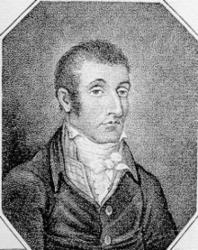
Charles Rodman Campbell
 USA
USA- Charles Rodman Campbell: American Killer
- Early Life and Previous Crimes
- Trial and Death Sentence
- Appeals and Execution
- Final Moments
Charles Rodman Campbell: American Killer
Charles Rodman Campbell was an American killer who was executed in 1994 in the state of Washington. He was convicted in April 1982 for the murders of Renae Wicklund, her eight-year-old daughter Shannah, and their neighbor Barbara Hendrickson in Clearview, Snohomish County, Washington. Campbell was found guilty and sentenced to death.
Early Life and Previous Crimes
Charles Rodman Campbell was born on October 21, 1954, in Oahu, Hawaii. Prior to the 1982 murders, he had already inflicted harm on the Wicklund family. In 1974, he was convicted of raping Renae Wicklund. During the trial, she recounted how Campbell attacked and raped her, holding a knife to her child's throat to prevent her from resisting. Campbell served six years of a 30-year sentence in a Washington prison before being released. Unbeknownst to the Wicklund family, he sought out Mrs. Wicklund after his release and killed three individuals.
Trial and Death Sentence
In 1982, Campbell was convicted of multiple counts of aggravated murder, which carried the possibility of the death penalty. He was given the choice between hanging and lethal injection, but he refused the latter. According to the law at the time, hanging was the required method of execution. Later, in 1996, amendments were made to Washington state law, making lethal injection the default method.
By 1984, Campbell's case had gone through the entire judicial system, and his death sentence was confirmed by the Washington Supreme Court on December 17, 1984. However, over the next 12 years, Campbell appealed his sentence three times.
Appeals and Execution
On November 7, 1988, Campbell's case reached the U.S. Supreme Court, which declined to hear his appeal. However, in 1993, Campbell exercised his right to appeal once again and filed a petition with the Supreme Court. During the proceedings, debates centered around the argument that hanging was a cruel and unusual punishment, thus violating the constitution.
On April 14, 1994, the United States Court of Appeals for the Ninth Circuit revoked all stays of execution. On May 3, 1994, Campbell requested another stay from the Supreme Court, claiming that hanging was unconstitutional, but his request went unanswered. His execution was scheduled for May 27.
Final Moments
Twenty-four hours before his execution, Campbell took his final shower. Two hours before being hanged, he was served his last meal, of which he refused to eat most. He spent his final hours conversing with friends and family.
When the time for execution came, Campbell refused to cooperate and did not rise from the floor of his cell. Pepper spray had to be used to remove him from the cell. He repeatedly turned his head, making it difficult for the executioner to place the noose around his neck. Ultimately, Campbell had to be strapped to a board before the noose was secured. He stood in place with a hood over his head and the noose in place for 90 seconds, as dictated by prison rules, before the trapdoor opened.
After his death, prison authorities discovered a 4-inch metal shard that Campbell had fashioned into a makeshift weapon.