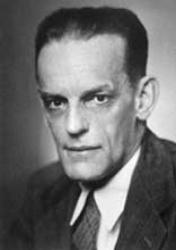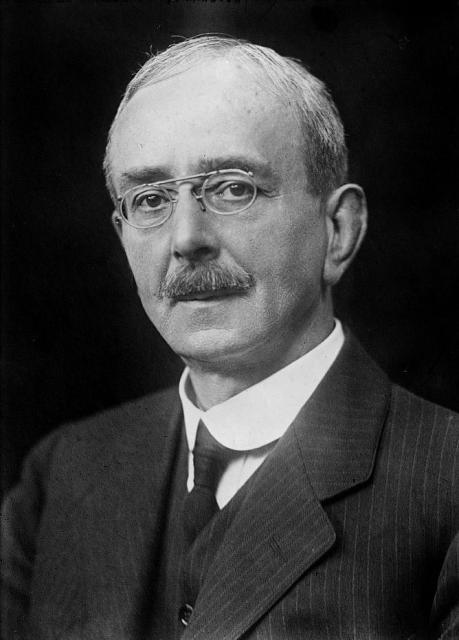
Charles Scott Sherrington
 Great Britain
- Charles Scott Sherrington: Trailblazer in Neurophysiology
- Early Life and Education
- Academic Career
- Groundbreaking Research
- Legacy and Influence
- Later Life and Honors
Charles Scott Sherrington: Trailblazer in Neurophysiology
Born in London on November 27, 1857, Charles Scott Sherrington embarked on a remarkable life dedicated to unraveling the intricate workings of the nervous system. His groundbreaking research earned him the prestigious Nobel Prize in Physiology or Medicine in 1932, shared with Edgar Adrian.
Early Life and Education
Sherrington received his formal education at Cambridge University, graduating in 1885. His intellectual curiosity led him to pursue advanced studies in Berlin, where he worked alongside the renowned scientists Robert Koch and Rudolf Virchow.
Academic Career
From 1891 to 1895, Sherrington served as a professor at the Brown Institute in London, sharing his expertise in physiology at St. Thomas' Hospital. In 1895, he became a professor at the University of Liverpool, a position he held until 1913. His final academic appointment was at Oxford University (1913-1936), where he made significant contributions to neurophysiology.
Groundbreaking Research
Sherrington's primary area of research focused on the physiology of the central nervous system. His most notable contributions include:
Formulating the principles of reciprocal innervation and the "common final pathway."
Denying the existence of dedicated coordinating centers, suggesting that coordination arises from the structural organization of the nervous system itself.
Establishing the concept of receptive fields and classifying receptors into proprioceptors, exteroceptors, and interoceptors.
Demonstrating the crucial role of proprioceptors in coordinating movements.
Defining the synapse as a point of contact between neurons and its significance in neuronal excitation and inhibition.
Identifying the existence of mutually enhancing and weakening (antagonistic) reflexes, as well as the phenomenon of reflex facilitation.
Investigating spinal cord inhibition and analyzing the summation of excitations.
Legacy and Influence
Sherrington's research not only advanced the field of neurophysiology but also laid the foundation for our understanding of the relationship between the nervous system and movement. He established a renowned scientific school in both England and the United States, mentoring many prominent neurophysiologists. His work has had a lasting impact on disciplines such as neurology, physiology, and neuroscience.
Later Life and Honors
Beyond his scientific endeavors, Sherrington served as president of the Royal Society of London (1920-1925). He received numerous prestigious awards, including the Order of Merit and the Copley Medal. Sherrington passed away in Eastbourne, East Sussex, on March 4, 1952, leaving behind a legacy of scientific excellence and a profound understanding of the complexities of the nervous system.