Andrey Bannikov
- Early Life and Education
- Military Service and Work in Mongolia
- Academic and Professional Career
- Exploration and Travel
- Publications and Legacy
Early Life and Education
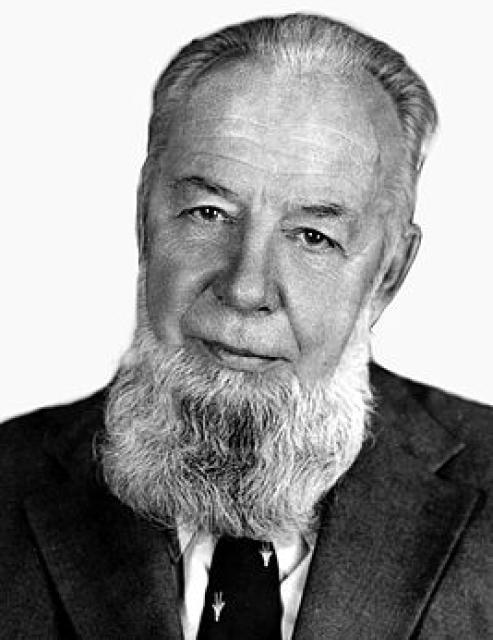
Andrei Grigoryevich Bannikov was born in Moscow in 1915. From the age of 11, he actively participated in the Young Biologists' Club (KYUBZ) at the Moscow Zoo under the guidance of P.A. Manteifel. He also worked at the Zoological Museum under Professor G.P. Dementiev. From 1935 to 1939, Bannikov studied at the biological faculty of Moscow State University (MSU).
Military Service and Work in Mongolia
In 1941, Bannikov volunteered for military service. From 1942 to 1947, he worked in Mongolia and later at the V.P. Potemkin Pedagogical Institute.
Academic and Professional Career
In 1954, Bannikov became Deputy Director of Science at the MSU Zoological Museum. After the closure of the Potemkin Institute in 1960, he became Head of the Department of Zoology at the Moscow Veterinary Academy.
In 1961, Bannikov was elected to the International Union for Conservation of Nature (IUCN) Species Survival Commission. In 1963, he led the working group on wild horses. Bannikov was one of the authors of the IUCN Red Data Book, and he contributed significantly to the creation of the two editions of the USSR Red Book.
In 1969, as General Secretary, Bannikov organized the IX Congress of Game Wardens in Moscow. In 1972, he was elected Vice President of IUCN, the first Soviet scientist to hold this position. He served in this role for six years. From 1978, he became Vice Chairman of the IUCN Species Survival Commission.
In 1982, the XV IUCN General Assembly conferred upon him the title of Honorary Member in recognition of his outstanding contributions to the conservation of nature and natural resources. Bannikov headed the Department of Zoology and Conservation at the K.I. Scriabin Moscow Veterinary Academy for 25 years. He received the title of Honored Scientist of the RSFSR and became a professor.
Exploration and Travel
Bannikov extensively explored the Soviet Union, visiting almost all of its nature reserves. He also traveled to over 25 countries in Europe, Asia, Africa, and North America. His "Mongolian period" was significant, during which he organized the first university in that country and headed its zoology department. The Mongolian government recognized his contributions with the Order of the Polar Star.
Publications and Legacy
Bannikov was a prolific author, publishing over 400 works, including 30 books. Many of his works were translated into foreign languages. He mentored countless young professionals and supervised over 30 doctoral and candidate's theses.
Bannikov made significant contributions to herpetology, theriology, ornithology, and nature conservation. He was a strong advocate for the preservation of endangered species and ecosystems. His work continues to inspire conservationists and scientists alike.