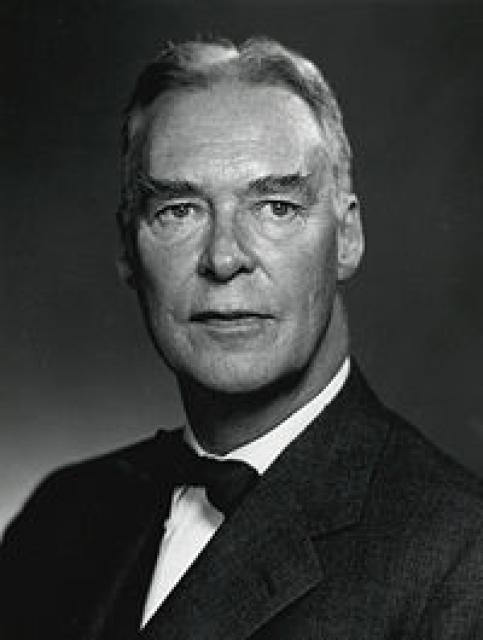
Christian Archibald Herter
 USA
USA- Early Life and Education
- Diplomatic Service
- Business and Academic Pursuits (1924-1943)
- Political Career
- Governor of Massachusetts (1953-1957)
- Secretary of State (1959-1961)
- Later Years and Legacy
Early Life and Education
Born in Paris, France, to American artist parents, Christian Herter spent his childhood between France and the United States. Upon his family's return to New York, he attended the Browning School and later graduated from Harvard University in 1915.
Diplomatic Service
Herter's diplomatic career began in 1916 when he became an attaché at the US Embassy in Germany. During World War I, he served as a special assistant to the Secretary of State and participated in the US delegation to the Peace Conference of Paris, culminating in the Treaty of Versailles.
Business and Academic Pursuits (1924-1943)
After the war, Herter transitioned to business and academia. He worked as an assistant to the Secretary of Commerce, executive secretary of the American Relief Administration in Europe, and was part of the Hoover Mission to the Soviet Union. Herter also engaged in publishing and teaching during this period.
Political Career
In 1931, Herter embarked on a political career as a member of the Massachusetts Legislature, where he eventually became House Speaker. From 1943 to 1953, he served as a U.S. Representative, actively supporting the Marshall Plan for economic recovery in Europe.
Governor of Massachusetts (1953-1957)
Elected Governor of Massachusetts in 1953, Herter held office until 1957. His tenure was marked by progressive reforms in education, transportation, and mental health care.
Secretary of State (1959-1961)
In 1957, Herter became Deputy Secretary of State, and in 1959 he was appointed Secretary of State under President Dwight D. Eisenhower. Herter played a key role in the U.S. response to the Cuban Missile Crisis and the negotiations leading to the signing of the Limited Nuclear Test Ban Treaty.
Later Years and Legacy
After leaving office in 1961, Herter remained active in international affairs as Chairman of the Atlantic Council of the United States and Special Representative for Trade Negotiations under Presidents Kennedy and Johnson. Herter's diplomatic skills and contributions to American foreign policy left a lasting legacy on international relations.