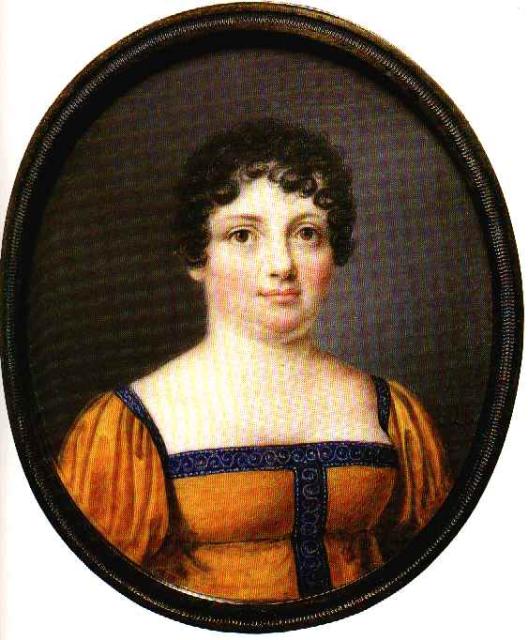
Christiana Vulpius
 Germany
- Christiane Vulpius: Goethe's Wife and Companion
- Meeting Goethe and Romantic Relationship
- Marriage and Social Challenges
- Overcoming Social Prejudice
- Personality and Domestic Life
- Illness and Death
Christiane Vulpius: Goethe's Wife and Companion
Early Life and Family BackgroundChristiane Vulpius was born in Weimar, Germany, in 1765. Her father, Johann Friedrich Vulpius, was an archivist who had abandoned his law studies. Her mother, Christiane Sophie Seyffert, came from a family of artisans. Despite the family's financial struggles, her father prioritized his eldest son's education. Christiane, meanwhile, worked as a cleaner in a small hat factory.
Meeting Goethe and Romantic Relationship
In 1788, Christiane met Johann Wolfgang von Goethe in a park. She requested his help on behalf of her brother, Christian August Vulpius, an aspiring writer who later gained some recognition in Germany. Goethe was drawn to Christiane's charm and intelligence, and a romantic relationship soon blossomed. Their first child, August, was born the following year. Four subsequent children did not survive infancy.
Marriage and Social Challenges
Christiane moved into Goethe's house, but their relationship faced opposition from the Weimar court and society. They were not legally married until 1806, after the French army entered Weimar. On October 14, 1806, Christiane courageously defended their home from French soldiers until Goethe obtained official protection. They were married on October 19, 1806, at the Jakobskirche.
Overcoming Social Prejudice
To address the resistance Christiane faced, Goethe sought help from Johanna Schopenhauer, the mother of philosopher Arthur Schopenhauer. Schopenhauer's widow invited the couple for tea, acknowledging that if Goethe deemed Christiane worthy, society should not deny her a social courtesy.
Personality and Domestic Life
Christiane's letters to Goethe reveal her lack of formal education, but she possessed a natural acumen for understanding people. She was a lively, practical, and energetic woman who managed a large household efficiently. She handled inheritance matters after Goethe's mother's death in Frankfurt and shared his passion for theater, attending performances in Weimar and Bad Lauchstedt.
Illness and Death
In 1815, Christiane suffered an apoplectic stroke. A year later, her kidneys failed, and she passed away in great pain on June 6, 1816. Despite the prejudices she faced, Christiane Vulpius was a devoted wife, companion, and a significant figure in Goethe's life.


