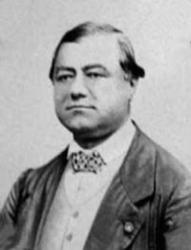
Christoph Scheiner
 Germany
- Christoph Scheiner
- Early Life and Education
- Astronomy and Optics
- Conflict with the Jesuits
- Other Contributions
- Legacy
Christoph Scheiner
Christoph Scheiner, a prominent German astronomer, physicist, mathematician, and mechanic, was born on July 25, 1575, in Wald, near Mindelheim.
Early Life and Education
Scheiner received an outstanding education and subsequently worked as a professor of Hebrew and mathematics at the University of Freiburg and the University of Ingolstadt. He became known for inventing two drawing instruments.
Astronomy and Optics
Alongside his professorship, Scheiner ventured into scientific research, particularly the observation of sunspots. In 1611, independent of Galileo Galilei and Johannes Fabricius, he discovered sunspots. He also determined the Sun's rotation period and the inclination of its rotational axis to the ecliptic.
In 1613, Scheiner constructed an astronomical telescope with two convex lenses, which is considered the world's first refracting telescope. He authored groundbreaking works in observational astronomy, conducting over 2,000 observations of sunspots.
Conflict with the Jesuits
Scheiner's astronomical pursuits displeased his superiors as a member of the Jesuit order. Initially, he attempted to conceal his research. To appease the Jesuits, who believed in the Sun's immaculate purity, he suggested that the spots were dark bodies orbiting the Sun. Later, he proposed that the spots were depressions on the Sun's surface.
Other Contributions
Scheiner also provided a detailed account of the remarkable "mock suns" he observed in Rome on March 20, 1629, accompanied by precise measurements. He wrote notable works on physics, covering telescopes and the eye.
Legacy
Christoph Scheiner made significant contributions to astronomy, physics, and other scientific disciplines. He passed away on July 18, 1650, in Neisse, Germany.