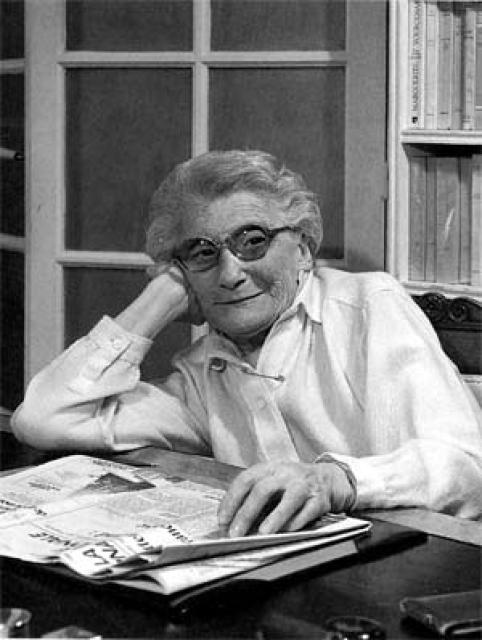
Claude Arrieu
 France
- Biography of Claude Arrieu
- Education and Early Career
- Work at Radio
- Achievements
- Notable Compositions
- Legacy
- Death
Biography of Claude Arrieu
Claude Arrieu was a French composer born on November 30, 1930, in Paris. She received a classical music education from an early age, with a particular interest in the works of Bach and Mozart. Later, she discovered contemporary music through Igor Stravinsky, but it was the compositions of Gabriel Fauré, Claude Debussy, and Maurice Ravel that truly inspired her.
Education and Early Career
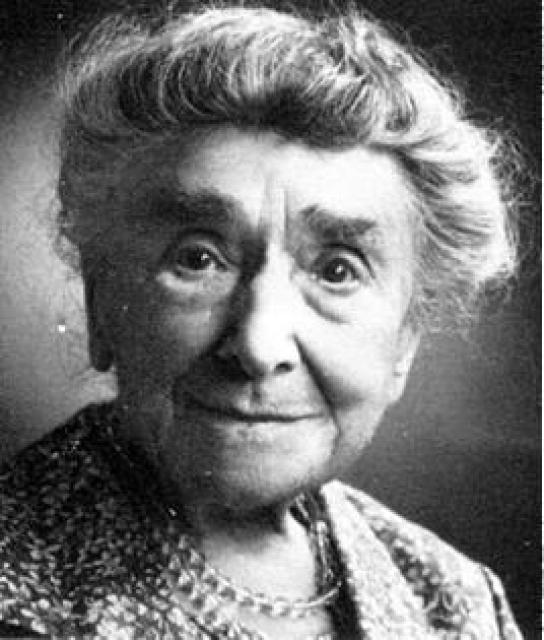
Dreaming of a career as a virtuoso musician, Arrieu became a student at the Paris Conservatoire in 1924. She studied under renowned pianist Marguerite Long and composers such as Georges Caussade, Noël Gallon, Jean Roger-Ducasse, and Paul Dukas. In 1932, Arrieu received her first prize for composition, marking the beginning of her unique style development. She was particularly interested in the evolution of musical language and various technical means.
Work at Radio
In 1935, Arrieu started working at the "Service des programmes de la Radiodiffusion française," the program department of French broadcasting, where she remained until 1947. She participated in the development of numerous programs, including Pierre Schaeffer's experimental radio program series "La Coquille à planètes" from 1943 to 1944.
Achievements
In 1949, Arrieu achieved success by winning the "Prix Italia" festival with her work "Frédéric Général," founded by the Italian radio broadcasting company RAI a year earlier. She wrote music in various genres, not only contemporary classical pieces but also music for theater, cinema, radio, and music halls. Her distinctive voice and taste for rhythm and imagery were evident in both dramatic and comedic situations. Her musical talent was characterized by the simplicity of flow and elegance of structure. Vivacity, clarity of expression, and a natural sense of melody were also distinguishing features of her works.
Notable Compositions
Arrieu created several notable compositions throughout her career. These included concertos for piano (1932), two pianos (1934), two violins (1938 and 1949), flute (1946), trumpet and strings (1965). She also wrote "Petite suite en cinq parties" (1945), "Concerto for wind quintet and strings" (1962), "Suite funambulesque" (1961), and "Variations for classical strings" (1970). Among her most important chamber works were the "Trio for Woodwinds" (1936), "Sonatina for Two Violins" (1937), and "Clarinet Quartet" (1964). Her "Sonatine for flute and piano" made a great impression during its first radio performance in 1944.
Legacy
Arrieu's legacy also includes vocal music set to the poems of Louis Aragon, Jean Cocteau, Stéphane Mallarmé, and Paul Éluard. The premiere of her first comic opera, "Cadet Roussel," took place on October 2, 1953, at the Marseille Opera. In 1960, she presented the opera-buffa "La princesse de Babylone," based on the works of Voltaire, which stood out for its lyrical originality and spectacle. Furthermore, from 1946 to 1974, Arrieu composed music for seven films, including television, documentaries, and short films.
Death
Claude Arrieu passed away in Paris on March 7, 1990, at the age of 86.