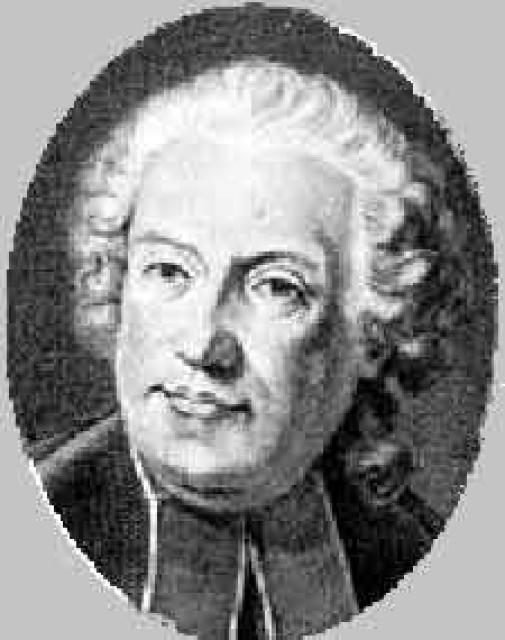
Claude Balbastre
 France
- Claude Balbastre, the Renowned French Composer
- Move to Paris and Career Success
- Royal Connections and Musical Legacy
- Personal Life and Revolutionary Times
- Death and Legacy
Claude Balbastre, the Renowned French Composer
Early Life and EducationClaude Balbastre was born on December 8, 1724, in Dijon, France. His father, Bénigne Balbastre, was a church organist who had 18 children from two marriages. Claude was the 16th child, and three of his brothers were also named Claude. He received his early musical training from his father and later became a pupil of Claude Rameau, the younger brother of the renowned French composer Jean-Philippe Rameau.
Move to Paris and Career Success
In 1750, Balbastre moved to Paris with the patronage of Jean-Philippe Rameau. He studied with Pierre Février and eventually became his successor as organist at the Église Saint-Roch. Balbastre quickly gained recognition in Parisian musical and social circles, establishing a brilliant career.
Royal Connections and Musical Legacy
Balbastre performed at the 'Concert Spirituel' until 1782 and held prestigious positions as organist at Notre-Dame Cathedral and the Chapelle Royale. He was appointed harpsichordist to the French royal court and even taught harpsichord to Queen Marie-Antoinette. Balbastre's fame grew so great that the Archbishop of Paris was forced to prohibit him from playing at certain services at Saint-Roch, as crowds gathered to hear him rather than attend religious services.
Personal Life and Revolutionary Times
Balbastre married Marie-Geneviève Hotteterre in 1763 and Marie-Antoinette Boileau in 1767. He had two children with Boileau. During the French Revolution, Balbastre's close ties to the French aristocracy could have proved dangerous, but he embraced the new political ideas and played revolutionary hymns and songs on the organ, retaining his position as organist at Notre-Dame, which had been transformed into the Temple de la Raison. However, he eventually lost his official job and a meager pension.
Death and Legacy
Claude Balbastre died in obscurity in Paris on May 9, 1799. He left behind a legacy of 14 organ concertos, sonatas, two collections of harpsichord pieces, four Christmas songs for flute and piano, and various variations on revolutionary hymns. Balbastre's musical brilliance and his contributions to the French musical landscape continue to be admired and studied today.