Claudia Connell
 Great Britain
- The Donut Diet: A Myth Exposed
- Investigating the "Donut Diet"
- The Science Behind IIFYM
- The Complexity of IIFYM
- The Personalization Process
- The Business of IIFYM
- The Reality of Eating Donuts
- The Calorie Conundrum
The Donut Diet: A Myth Exposed
The Allure of IIFYMIn the realm of fad diets, the "Donut Diet" has emerged as a tantalizing promise. With its flexible approach, proponents claim you can eat virtually anything as long as you adhere to a few "simple rules." But does it truly deliver?
Investigating the "Donut Diet"
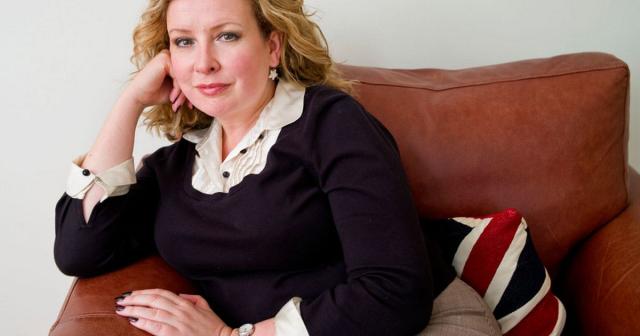
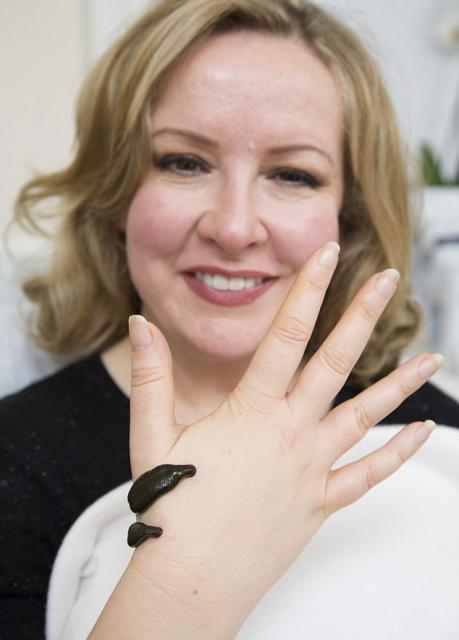
Intrigued by the hype, Claudia Connell, a 50-year-old journalist, embarked on a journey to unravel the "Donut Diet." Her investigation led her to the acronym IIFYM (If it fits your macros). Promoted heavily on social media, particularly on Instagram where #IIFYM boasts nearly six million photos, the diet claims to be a foodie's dream. However, Connell acknowledges, "Deep down, every dieter knows that the only real way to lose fat is to eat less and move more."
The Science Behind IIFYM
According to IIFYM, you don't need to "cut out" entire food groups. You can enjoy pasta, potatoes, donuts, and chips, but with a caveat: you must religiously track your calories and macros. "Macros" is short for macronutrients, with the essential ones being protein, fat, and carbohydrates. If calorie counting sounds familiar as a weight-loss method, it's because it gained popularity in the 1920s and flourished in the 1970s with the Scarsdale Diet. So, is history repeating itself?
The Complexity of IIFYM
Visiting the official IIFYM website, Connell discovers that it's not as straightforward as it appears. The American bodybuilder behind IIFYM, Anthony Collova, explains, "Fed up with the constant hype and confusion surrounding diet creation, I wanted to start a site that promoted a nutrition plan that was easy to understand and simple to follow... something that was based on science and nutrition rather than hype and gimmicks."
Collova's website also claims to save people from "fad books, programs, and so-called experts... who pitch you their latest quick fix, hype, or batch of nonsense—stuff that confuses you and empties your wallet." "All very noble," states Connell, "but I have to question Anthony's use of the phrase 'easy to understand,' because trying to get my head around IIFYM has given me a brain freeze."
The Personalization Process
An online calculator on the website prompted Connell to input her age, weight, height, and activity level, before generating her TDEE (Total Daily Energy Expenditure). This number represented her estimated daily calorie requirement based on her activity level, which in her case was 1682 calories.
Next, the "guinea pig" was asked whether she wanted to "lose fat, get lean, or gain muscle and get toned." Connell opted for "lose fat," and the calculator adjusted her intake to 1430 calories per day.
The complications arose when the calculator provided her with a strict macronutrient breakdown: 35% of her calories should come from 126 grams of protein, equivalent to a chicken breast, a can of tuna, and a medium-sized steak. Fat, amounting to 63 grams (40% of calories), could be "sourced" from half an avocado and a handful of nuts. Lastly, the prescribed 91 grams of carbohydrates could be obtained from two slices of toast.
"I was gobsmacked," Connell remarks. "I'd be left hungry. My promised donuts, pizza, and burritos were nowhere to be seen." Upon consulting dietitian Dr. Sarah Schenker, the journalist was told that "some diets made a big play on being scientifically based but aren't."
In Connell's case, the "eat what you want" element was confined to a mere 375 calories. Barely enough for a bar of chocolate and a glass of wine.
The Business of IIFYM
"Aggrieved at being short-changed," Connell inquired about purchasing a "personalized plan" from Collova for $47, which she did. No sooner had she made her purchase than she was offered an upgrade—a fully tailored nutrition plan—for $297.
"IIFYM insists its dieters weigh everything they eat, recommending the purchase of a digital kitchen scale. I decided to bypass that and simply used my bathroom scales."
Connell continues, "At one point, I found myself weighing a boiled egg and a piece of toast. It's not enough to simply Google the nutritional value of something, because according to Anthony, 'If you're off by more than three grams, it will affect your weight loss.' Sounds a lot like 'flexible' eating to me."
The Reality of Eating Donuts
Still craving the promised donuts, Claudia sought the assistance of a friend who was "utterly at home with numbers." Her friend elaborated that while eating donuts, pizzas, and most other things was indeed possible, it required a significant amount of mathematical wizardry.
For example, if Connell indulged in a Tesco's Jam Donut, which contains 225 calories (7.6g fat, 34.4g carbs, and 3.9g protein), she would have 1205 calories remaining for the day (55.4g fat, 56.6g carbs, and 122.1g protein).
Her friend calculated that the "leftover" calories would cover a breakfast of two slices of toast with butter, two boiled eggs, and two rashers of grilled bacon; a chicken salad for lunch; and for dinner, a tuna steak with two tablespoons of potato salad and half a packet of steamed green beans, followed by a low-fat yogurt with a handful of strawberries.
It sounds appealing until you realize that the calculations required "O-level" math, an hour of work, and a spreadsheet. "All those Instagrammers must be mathematicians and Excel whizzkids, the rare breed with an inexhaustible supply of time," Connell concludes.
The Calorie Conundrum
In a sobering reminder, researchers at Harvard University discovered three years ago that the calorie counts listed on food labels, particularly for prepared foods, can be inaccurate by up to 50%.