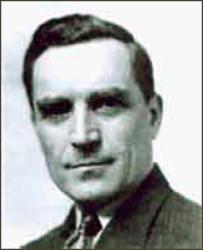
Clement Ader
 France
- Life and Early Career
- Contributions to Communication and Sound
- Quest for Mechanical Flight
- Development of the Avion Series
- Legacy and Recognition
Life and Early Career
Clément Ader, a French engineer born in Muret, Haute-Garonne, is renowned for his pioneering work in aviation. Before delving into flight, Ader studied electrical engineering and made significant contributions to the field. In 1878, he improved upon Bell's telephone, establishing the first telephone network in Paris two years later.
Contributions to Communication and Sound
In 1881, Ader invented the "théâtrophone," a dual-channel audio transmission system that enabled binaural hearing. This technology allowed listeners to distinguish the location of performers on stage, paving the way for stereophonic opera broadcasts spanning distances of up to 3 kilometers.
Quest for Mechanical Flight
Ader's passion for mechanical flight consumed much of his time and resources. Inspired by Louis Pierre Mouillard's (1834-1837) studies on bird flight, he constructed his first aircraft, the Éole, in 1886. This bat-like contraption featured a lightweight steam engine of his own design (4 cylinders, 20 horsepower) and a four-blade propeller. With a wingspan of 14 yards and a weight of 300 kilograms, the Éole took flight on October 9, 1890, covering a distance of 50 meters. This marked the first self-propelled flight in history, predating the Wright brothers by 13 years.
Development of the Avion Series
After his successful flight on the Éole, Ader built the Avion II, also known as the Zéphyr or Éole II. However, there is debate over whether this aircraft was ever completed. Instead, Ader focused his efforts on the Avion III, a larger and more ambitious design. Supported by the French military, Ader constructed the Avion III, resembling a colossal bat. It boasted a 16-yard wingspan and two four-blade propellers powered by 30-horsepower steam engines. On October 14, 1897, Ader attempted to fly the Avion III, but the results were inconclusive. Some witnesses claimed it soared over 300 meters, while others insisted it crashed before takeoff.
Legacy and Recognition
Clément Ader remained a staunch advocate for aviation. He published "L'Aviation Militaire" in 1909, a highly influential book that envisioned aerial warfare and accurately described the concept of modern aircraft carriers. His ideas were shared with the US Naval Attaché in Paris and played a pivotal role in the development of the first American aircraft carriers.
Despite facing criticism from historians outside France, Ader's pioneering flights cannot be dismissed. His flight on the Éole in 1890 is well-documented, solidifying his place as a significant contributor to the history of aviation. In recognition of his achievements, the French government issued a commemorative postage stamp in 1938, and an Airbus assembly plant in Toulouse bears his name.