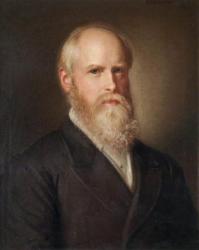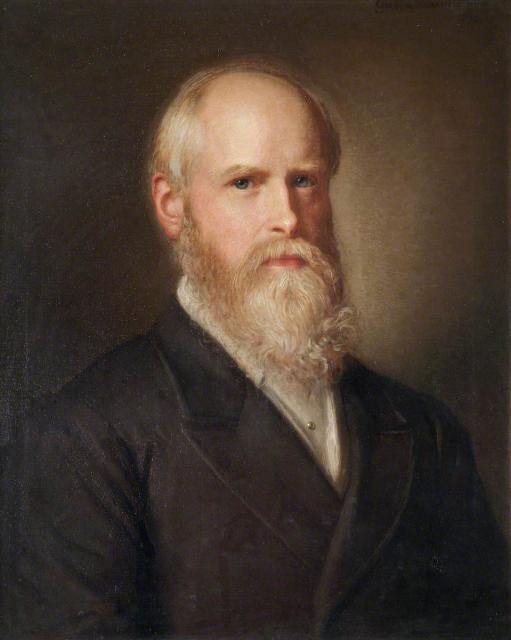
Clement Mansfield Ingleby
 Great Britain
- Early Life and Education
- From Law to Literary Scholarship
- Shakespeare Studies and Public Debate
- Personal Life and Legacy
Clement Mansfield Ingleby built a life around two pursuits that rarely sat comfortably together: the law he trained for and the literature that held his attention. After leaving legal practice, he became a leading Victorian Shakespeare scholar, known both for exposing forged documents and for painstaking work on the plays’ texts and historical reception.
Early Life and Education
Ingleby was born in Edgbaston, near Birmingham, on October 29, 1823. His father was a Birmingham solicitor, and the family expected him to enter the legal profession. Persistent ill health limited his early schooling, but at twenty he entered Trinity College, Cambridge. He graduated in 1847 and later received a master’s degree and a doctorate in law.
While at Cambridge, Ingleby developed a serious interest in metaphysics, mathematics, and English literature, especially drama. One of his early Shakespeare essays, “The Neology of Shakespeare,” was read before a Birmingham literary society in 1850. He briefly held the chair of logic at the Midland Institute and published a textbook, Outlines of Theoretical Logic, in 1856.
From Law to Literary Scholarship
For about a decade after university, Ingleby worked in his father’s law office and became a solicitor and partner. The profession did not suit him. In 1859 he left law and moved from Birmingham to the London area, devoting more time to writing and scholarship.
His early Shakespeare studies brought him into a major scholarly controversy. In The Shakespeare Fabrications (1859) and A Complete View of the Shakespeare Controversy (1861), he challenged the authenticity of documents associated with John Payne Collier, a respected antiquary whose papers were later shown to include forgeries. Ingleby’s intervention helped expose the problem and strengthened the case for more rigorous scrutiny of purported historical evidence.
He continued to write on philosophy as well as literature, publishing Introduction to Metaphysic in two parts in 1864 and 1869. But from the 1870s onward Shakespeare became the central subject of his work.
Shakespeare Studies and Public Debate
Ingleby’s Shakespeare Hermeneutics, first issued as The Still Lion in 1874, examined difficult passages and argued against what he considered unnecessary alterations to the 1623 First Folio. That same year he published Shakespeare’s Centurie of Prayse, a collection of references to Shakespeare and his works from 1592 to 1692. The book became a useful resource for later scholars and was expanded in subsequent editions.
His multi-part Shakespeare: the Man and the Book brought together textual commentary and research into the playwright’s life and works. Ingleby also edited Cymbeline, published in 1886, a work later praised for its conscientious handling of the text despite the effects of his failing health.
One of his more unusual proposals stirred strong opposition. In Shakespeare’s Bones (1882), he suggested that Shakespeare’s grave be opened and the skull examined in the hope of clarifying questions about the playwright’s portraiture. Public protests made clear that the proposal would not be accepted, and no exhumation took place.
Ingleby’s interests ranged well beyond Shakespeare. His essays addressed acoustics, stereoscopic vision, the rainbow, religion, spelling reform, and other subjects. He also assisted research on papers relating to Isaac Newton and Gottfried Wilhelm Leibniz, and contributed to the work of the Royal Society of Literature and the New Shakspere Society.
Personal Life and Legacy
Ingleby married in 1850 and had a son, Holcombe, who later became a solicitor and writer. Though he was a capable scholar, chronic ill health repeatedly restricted the amount of work he could complete. He died at his home in Ilford, Essex, on September 26, 1886, aged 62.
His reputation rests on the care he brought to Shakespearean evidence and editing. By questioning celebrated documents, collecting early references, and resisting casual changes to the text, Ingleby helped establish a more critical approach to Shakespeare studies. His range—from logic and metaphysics to literary history—also reflects a Victorian scholar who resisted being confined to a single discipline.