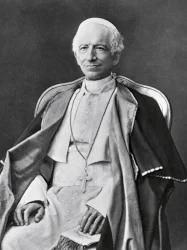
Clement VI
Clement VI was an elegant scholar and forceful ruler whose papacy made Avignon an even more established center of European power. Elected in 1342, he presided over the papal court during the Black Death, negotiated with kings, and purchased the city of Avignon for the papacy. He was known for generosity and culture, but also for the lavishness of his court. His response to plague-era persecution of Jews showed a willingness to challenge dangerous rumors even as medieval Christian policy remained deeply unequal.
From monastery to papal court
Born Pierre Roger around 1291 in the Limousin region of what is now France, he entered the Benedictine order while young and studied theology in Paris. He rose through the church, serving as abbot and bishop before becoming archbishop of Sens and then Rouen. His learning and experience in administration brought him into the orbit of the French royal court and the papacy.
After Pope Benedict XII died, the cardinals elected Roger in 1342. He chose the name Clement VI. The papacy had been based in Avignon since 1309, and Clement made the city a more permanent home for the institution. In 1348, he purchased Avignon from Joanna I of Naples for 80,000 florins, securing the papal court’s sovereignty over the city. He expanded the papal palace and surrounded himself with scholars, artists, and diplomats. His patronage helped make Avignon a major center of European culture, though critics also saw the court’s display and spending as excessive.
A pope in an age of plague
The Black Death reached Avignon in 1348 and devastated Europe. Fear and religious uncertainty fueled accusations that Jews had poisoned wells, leading to massacres in many parts of the continent. Clement issued statements rejecting the accusation, noting that the plague also killed Jews and affected regions where no Jewish communities lived. He urged church authorities to protect Jewish communities and condemned attacks against them. These interventions did not end persecution, and his theology still reflected the discriminatory assumptions of the era, but his defense directly challenged a deadly conspiracy theory.
Clement also responded to the crisis with prayer, public ritual, and practical measures. In the following year, he supported the 1350 jubilee in Rome, which drew pilgrims even as plague and war continued. He sought to mediate the Hundred Years’ War between England and France, securing a temporary truce in 1343, but the conflict resumed. His diplomacy demonstrated the reach of the papacy, while also revealing its limits when royal ambitions overrode religious appeals.
Politics, patronage, and legacy
Clement’s reign involved the tangled politics of the Holy Roman Empire, Italy, and the French crown. He backed Charles IV’s election as king of the Romans against Emperor Louis IV, whose conflict with the papacy had long strained relations. Clement’s position was shaped by his French background and the courtly world in which he had risen, and his efforts to broker peace were not always viewed as neutral.
He died in Avignon on December 6, 1352, after a decade as pope. Clement VI strengthened the Avignon papacy materially and culturally, giving its residence a more secure political foundation. He combined learning and genuine concern for the vulnerable with the ceremony and expenditure of a powerful medieval court. His actions during the Black Death remain especially striking: at a moment when panic turned minorities into targets, he used the authority of his office to reject a false accusation and call for protection.