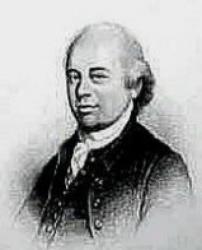
Cornelius Tromp
 Denmark
Cornelius Tromp: Biography of a Danish Navigator
Cornelius Tromp, a Danish navigator, was born the son of the renowned admiral Martin Tromp. However, he earned his own fame by commanding fleets in wars against England, France, and Sweden. From a young age, he studied the art of sailing and began his service as a lieutenant on his father's ship in 1645. By 1649, he had become a captain. Tromp defended Dutch navigation and fought North African pirates in the Mediterranean Sea in 1650. In the First Anglo-Dutch War, in 1652, he distinguished himself in a sea battle against the English while commanding a frigate. In the Battle of Leghorn in 1653, he captured a 40-gun English ship. Following this battle, Tromp was promoted to Rear Admiral.
Tromp always demonstrated his ability to act independently and found pleasure in battle. In 1654, he fought against the Algerians, and the following year, he sailed to the Baltic Sea to participate in the First Northern War between Sweden and Poland. In 1663, he was appointed commander of the Dutch fleet in the Mediterranean Sea. After several years of active service, he was promoted to Vice Admiral in 1665. Tromp played a significant role in the Second Anglo-Dutch War, which erupted due to economic conflicts between the two countries. This time, France was the Netherlands' ally, but Louis XIV did not intend to genuinely assist the Dutch and pursued his own interests. This ambiguity affected the course of the battles.
In the Battle of Lowestoft on June 13, 1665, Tromp led the Dutch fleet in combat. However, the Dutch vanguard was immediately disrupted, leading to panic and the withdrawal of several ships. Tromp attempted a desperate attack on the flagship of the Duke of York but perished in the explosion of his own ship. Subsequently, several Dutch ships were set on fire by English fire ships. The defeated Dutch fleet retreated, with Tromp's squadron covering their withdrawal. However, the English did not pursue them, allowing the Dutch to recover from the defeat.
After the battle, Tromp became the commander-in-chief of the Dutch fleet. The Dutch immediately began rebuilding their naval forces. However, when Admiral Michiel de Ruyter returned from the West Indies, the more experienced sailor was given Tromp's position, which Tromp considered unfair. In 1666, Tromp moved to the Admiralty of Amsterdam and soon his conflict with de Ruyter became evident. A more serious confrontation occurred in July 1666, after de Ruyter attempted to explain the defeat to the English by the fact that Tromp did not come to his aid. In the Four Days' Battle from June 11 to 14, 1666, Admiral Monk decisively attacked Tromp's Dutch vanguard with 35 ships. As the Dutch center and rear were downwind and unable to assist, Tromp fought against superior enemy forces, but his artillery outweighed the English's. However, at 5 pm, the English brought in their rear, turning the tide and allowing the center to engage. The Dutch, who continued to fight until 8 pm, captured two admiral ships and successfully used three fire ships. On June 12, the fleets continued the battle. This time, Tromp, commanding the rear, went upwind of the English vanguard and was separated from the main forces. De Ruyter attacked the English, destroying seven ships. Monk's fleet began retreating to join Rupert's ships, previously assigned to fight the French squadron. They met on the evening of June 13. The next day, Monk attacked. Due to the maneuver of van Ness, who commanded the vanguard and chased a group of English ships, the Dutch fleet divided into three parts. Only by 3 pm did van Ness and Tromp unite but found themselves downwind. Then de Ruyter decided to attack the enemy from two sides. Their pressure forced Monk's surrounded ships to flee. The English lost 17 ships, with 5,000 killed and 3,000 captured, while the Dutch only lost 4 ships and 2,000 killed.
In the Battle of the Texel on August 4, Tromp pursued the English rear and left de Ruyter with 12 ships against almost the entire English fleet. Cornelius chased the enemy to Galloper but failed to engage them and returned to Vlissingen. De Ruyter followed him and skillfully defended against the attacks of the pursuing English. However, due to the confusion in the actions of the fleet admirals, the battle was lost. The Dutch lost 10 ships, while the English lost 4. For his conduct in the battle of August 4, 1666, Tromp was removed from service. De Ruyter held the flagship commander responsible for the defeat. After the assassination of Tromp's enemy, de Witt, and the rise to power of William of Orange, who sympathized with the House of Orange, Tromp was reinstated and reconciled with de Ruyter. Tromp was promoted to Lieutenant Admiral of the Admiralty of Amsterdam and fought alongside de Ruyter in the battles of Schooneveld and Texel that same year. De Ruyter did not hold any grudges and often saved his more impulsive subordinate from danger.
In the Battle of Schooneveld on June 7, 1673, Tromp, carried away by the battle, became detached from the main forces, and only de Ruyter's arrival saved him. The combined forces repelled the superior Anglo-French fleet. In the Second Battle of Schooneveld on June 14, the allies, with disrupted formations and damaged ships, retreated to the English coast. In July, the Dutch limited themselves to cruising. When news of the assembling of a joint fleet and ships with landings on the Thames became known in August, de Ruyter prepared for battle and on August 20, went out to sea with 70 ships against 95 nearby cruising allied ships. The battle began at 8 am on August 21, 1673. With Tromp leading the rear, he attacked the ship commanded by his personal enemy, Spragge, who commanded the English rear. The latter fell behind to engage Tromp, and eventually became completely detached from the main forces. The ships of the English rear suffered greatly from Tromp's artillery, lost their rigging, and Spragge drowned when his boat was hit by a shell. Bankert, commanding the Dutch vanguard, skillfully broke through the French squadron, which formed the enemy's vanguard, and returned to de Ruyter. The French were stunned and did not participate in the battle. Rupert and the English center had to fight against the superior Dutch forces. As a result of the battle that lasted until 7 pm, the English lost 9 ships and many sailors, while the Dutch losses were minimal.
After the Westminster Treaty in 1674 between England and the Netherlands, Tromp cruised off the French coast. However, contrary to instructions, he embarked on an expedition in the Mediterranean Sea, which ended in failure, and for this, the Admiralty criticized him. After the death of Michiel de Ruyter in 1676, Cornelius took command of the Dutch fleet. In the same year, Tromp became the commander-in-chief of the joint Danish-Dutch forces, which were fighting against the Swedes, and served in the Danish navy until 1678. While assisting the Danes, he gained recognition and fame in battles against the Swedish fleet. Afterward, he helped the ruler of Brandenburg seize the island of Rügen from Sweden. He then returned to the Netherlands and in 1691, became the commander of the fleet as Lieutenant Admiral-General of the Dutch Republic. He was appointed as the fleet's commander-in-chief in the fight against France. However, Tromp was already ill and did not go to sea. He passed away on May 29, 1691, in Amsterdam. King Charles I of England bestowed upon him the title of baronet, and the King of Denmark made him a count.
Cornelius Tromp was buried in Delft, in his father's mausoleum. Due to his hot temper and lack of discipline, Tromp achieved fewer successes than he could have and created many problems for de Ruyter. Nevertheless, the determined pressure from this sailor played a role in the battles in which he participated.