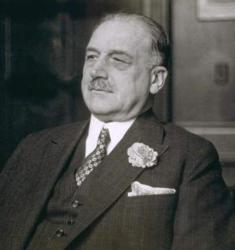
Cosimo Medici
 Italy
Italy- Biography of Cosimo de' Medici (the Elder)
- Rise to Power
- Financial Acumen and Patronage
- Support for Artists and Scholars
Biography of Cosimo de' Medici (the Elder)
Cosimo de' Medici (the Elder) was born on September 27, 1389, in Careggi, Florence. He was a merchant, banker, and owner of the largest fortune in Europe. He laid the foundation for the power of the Medici family, transforming the Republic of Florence into a signoria.
Rise to Power
Cosimo actively participated in city affairs, earning the trust and favor of the people through generous donations to public needs and culture, gifts and loans to citizens and the state, and the distribution of bread during times of famine. In 1433, Cosimo, who led the popular party opposing the ruling oligarchy, was arrested and subsequently exiled from Florence. However, in November 1434, he triumphantly returned to Florence and became the de facto ruler of the state until his death. Despite holding immense power, he remained a simple citizen, refusing any title and maintaining republican forms.
Financial Acumen and Patronage
Cosimo was a prudent manager who personally oversaw the trading and banking affairs of his household, as well as the cultivation of his lands. The foundation of his political power was his personal fortune, which allowed him to act as a creditor to King of England, the Duke of Burgundy, the Duke of Milan, the Pope, and other rulers of Italy and Europe. A characteristic feature of Cosimo's rule, as well as that of the Medici family who succeeded him, was their extensive patronage of humanists and artists, which brought them European-wide fame as patrons of the arts.
Support for Artists and Scholars
Cosimo collected artworks and books, providing support to figures such as Leonardo Bruni, Poggio Bracciolini, Leone Battista Alberti, Cristoforo Landino, Ioannes Argyropulos, and Marsilio Ficino, who were part of the humanist circle known as the Platonic Academy. He also commissioned works from the artist Filippo Lippi and the architect Michelozzo.
After his death, Cosimo was posthumously honored by his fellow citizens with the honorary title "Father of the Fatherland."