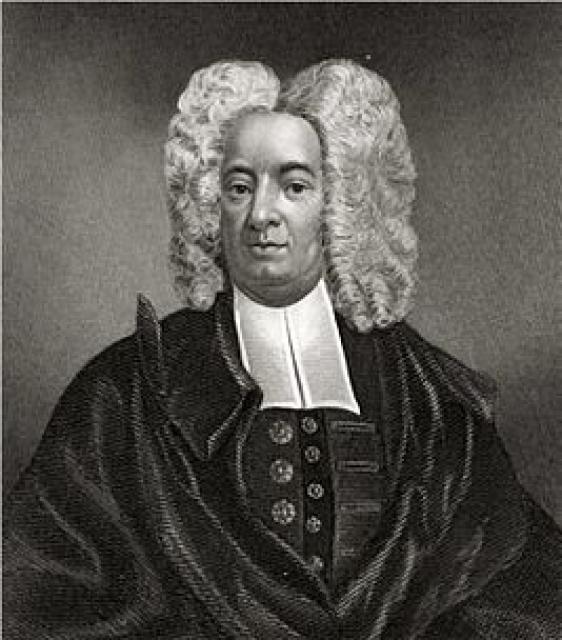
Cotton Mather
 USA
USA- Cotton Mather: A Puritan Preacher, Scholar, and Author
- Intellectual Brilliance and Early Education
- Ministerial Leadership and Presidency of Harvard
- Literary and Historical Contributions
- Role in Salem Witch Trials and Colonial Politics
- Scientific and Colonial Interests
- Personal Life and Legacy
Cotton Mather: A Puritan Preacher, Scholar, and Author
Cotton Mather (1663-1728) was a prominent figure in early American history, known for his prolific writings and influential role in the religious, political, and intellectual landscape of the time.
Intellectual Brilliance and Early Education
Mather's precocious intellectual abilities were evident from a young age. He graduated from Harvard College at the age of 17 and later obtained a Master of Divinity degree from Trinity College, Dublin. He preached at various churches in England before returning to America to assume a ministerial role in Boston.
Ministerial Leadership and Presidency of Harvard
In 1674, Mather was elected Censor, in 1679 a member of the Synod, and in 1685 President of Harvard College. He was the first American elected a Fellow of the Royal Society of London for his zoological research, published as "Curiosa Americana" (1712-1724).
Literary and Historical Contributions
Mather's literary corpus included over 450 works. Among his most significant were:
- "The Wonders of the Invisible World" (1693): An account of the Salem witch trials.
- "Magnalia Christi Americana, or The Ecclesiastical History of New England" (1702): A multivolume history of New England settlements, recounting the lives of prominent religious and political figures.
- "Christian Philosopher" (1721): A treatise on natural philosophy and theology.
- "Essays to Do Good" (1710): A collection of ethical and philosophical essays that influenced Benjamin Franklin's early life.
Role in Salem Witch Trials and Colonial Politics
Mather had connections to some of the judges involved in the Salem witch trials. He penned a treatise on the admissibility of spectral evidence in court, which has been interpreted as either endorsing or questioning the proceedings. He also may have participated in the prosecution of William Fly.
Scientific and Colonial Interests
Mather was an active experimenter and naturalist. He studied plant hybridization, seed germination, and smallpox inoculation. He represented American colonies in England during a period of strained relations with the Crown.
Personal Life and Legacy
Mather was married three times and had 15 children, only two of whom survived him. His writings and activities left an enduring mark on American literature, religious thought, and the history of science. His contributions to the political and social debates of his time helped shape the development of the American colonies.




