Cristian Lange
 Norway
Biography of Christian Lange
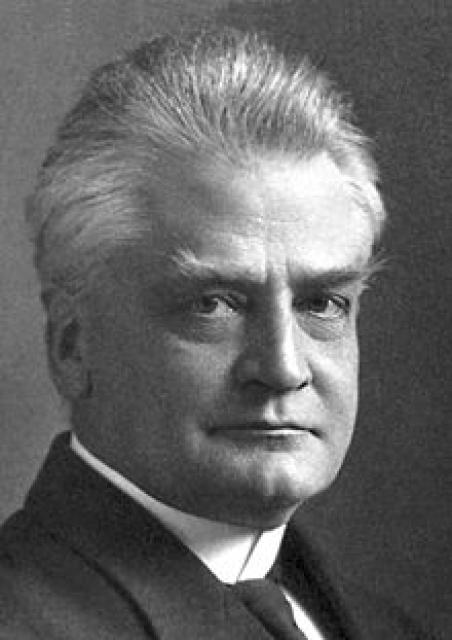
Christian Lous Lange, a Norwegian internationalist, was born in the port city of Stavanger in southwest Norway. His grandfather was a renowned historian and archivist, while his father, Colonel Halvard Lange, was an engineer in the Norwegian army. Lange showed exceptional diligence in his studies and specialized in linguistics and history at the University of Oslo. After defending his dissertation on the history of internationalism, Lange obtained his master's degree in 1893.
The following year, Lange married Berte Mantey, the daughter of a judge. For seven years, he taught in secondary schools in Oslo and further improved his language skills through summer travels. He wrote a review of world history, which later gained recognition as a school textbook. During this time, he became interested in the movement for Norwegian independence from Sweden.
In anticipation of the Inter-Parliamentary Union conference in 1899 in Oslo, Lange was invited to serve as the secretary of the preparatory committee. Established in 1888 by William R. Cremer and Frédéric Passy, the Union advocated for arbitration as a means of resolving international conflicts. Lange demonstrated significant tact and organizational abilities during the conference and accepted an offer to become the secretary of the newly formed Norwegian Nobel Committee a year later.
Lange remained an advisor to the Nobel Committee even after resigning in 1909 to assume the position of Secretary-General of the Inter-Parliamentary Union and relocating to Brussels, where the Union's headquarters were located. While coordinating the Union's activities, he served as a liaison between its branches and often traveled to countries within the Union during the preparation of annual conferences. At the same time, he lectured, raised funds, delivered speeches, and edited Union publications. The outbreak of World War I disrupted the Union's work. When German troops invaded Brussels in 1914, the organization's funds were confiscated. Lange hurriedly moved the headquarters to neutral Norway to save the documents and continued working almost alone. He supported himself by teaching at the Nobel Institute. At Lange's request, the Carnegie Endowment for International Peace, where Nicholas Murray Butler worked, provided the Inter-Parliamentary Union with enough funds to survive.
During the war, Lange participated in the work of the Stockholm Conference of Neutral Countries, which advocated for the swift end of the war, and collaborated with the Central Organization for the Preservation of Peace, a Dutch pacifist society. As a correspondent for the Carnegie Endowment, Lange wrote a report on the situation in the warring countries. Immediately after the war ended, Lange undertook the task of rebuilding the Union, which was complicated by the lack of funds and the desire of some countries to exclude their recent wartime opponents. Nevertheless, Lange managed to organize the first post-war conference in Geneva in 1921.
In the same year, Lange was awarded the Nobel Peace Prize, which he shared with Karl Branting. Lange's Nobel lecture was titled "Internationalism," a term he preferred over "pacifism." He stated, "Today, we stand on a bridge, thrown from territorial states to an international community." He believed that "our well-being rests on international cooperation and markets," and that war, under these circumstances, is suicide. As a supporter of world federation, Lange welcomed the establishment of the League of Nations as the "first serious and conscious attempt to achieve this goal." Lange actively participated in the work of the League of Nations, serving as a delegate from Norway and sitting on several of its committees. Convinced that war cannot be made humane, Lange dedicated his efforts primarily to disarmament. He chaired the Committee on Political Questions and another committee that informed the League about the development of the conflict between China and Japan. Lange was also involved in the work of the Inter-Parliamentary Union, writing articles, books, and pamphlets on arms control and arbitration. Before and after World War I, he gave approximately 500 lectures.
In 1923, Lange visited the United States, where he delivered speeches at 30 universities and other institutions. In 1938, he gave a lecture on peace at the Friends House in London, which was later published under the title "Imperialism and Peace." At the age of 62, Lange stepped down from his position as Secretary-General of the Inter-Parliamentary Union. A year later, he was re-elected to the Norwegian Nobel Committee. On December 2, 1938, Lange passed away at his home in Oslo. His son, Halvard, continued Lange's work as the Minister of Foreign Affairs of Norway from 1946 to 1965.
Oscar Falnes, a historian, described Lange's commitment to the cause of peace as unwavering and indivisible, writing, "It was not harmed by the pre-war euphoria, the sufferings of the war period, or the armed optimism of the League of Nations era. He dedicated himself to this cause in the fullest sense of the word."