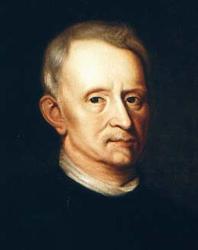
Ctesibius
 Greece
- Ctesibius: The Father of Pneumatics
- Early Life and Influences
- Pioneering Inventions
- Hydraulic Organ (Hydraulis)
- Piston Pump
- Water Clocks (Clepsydra)
- Compressed Air Weapons
- Mathematical and Scientific Contributions
Ctesibius: The Father of Pneumatics
Ctesibius, a renowned inventor and engineer of the Hellenistic era, hailed from Alexandria in Egypt. Widely regarded as the "father of pneumatics," his contributions laid the groundwork for the fields of fluid mechanics, hydraulics, and the theory of air elasticity.
Early Life and Influences
Almost nothing is known about Ctesibius's personal life, apart from the belief (possibly stemming from Diogenes Laertius's writings) that he was either a barber or the son of one. As a young barber, he is credited with inventing a clever counterweighted mirror that allowed clients to adjust its angle during shaving.
Pioneering Inventions
Ctesibius's legacy stems from his remarkable inventions, which include:
Hydraulic Organ (Hydraulis)
This groundbreaking instrument, considered the forerunner of the modern organ, employed the principle of compressed air to produce music. Initially powered by two piston pumps that forced air into a reservoir, it was later modified to use bellows for both pumping and pressure regulation.
Piston Pump
Ctesibius's piston pump revolutionized water management. It could create powerful jets, extract water from wells, and led to the development of the siphon.
Water Clocks (Clepsydra)
Ctesibius's water clocks were the most precise timekeeping devices until the invention of the pendulum by Christiaan Huygens in the 17th century.
Compressed Air Weapons
Ctesibius devised ingenious compressed air-powered weapons such as the stone-thrower and the ballista. By tensioning their strings, levers activated pistons in air chambers, which then propelled projectiles upon release.
Mathematical and Scientific Contributions
Ctesibius was the first known scientist to implement a water integrator, a device used in mathematical computations. Although his written works have been lost, his contributions are well-documented through passages in the writings of Athenaeus.