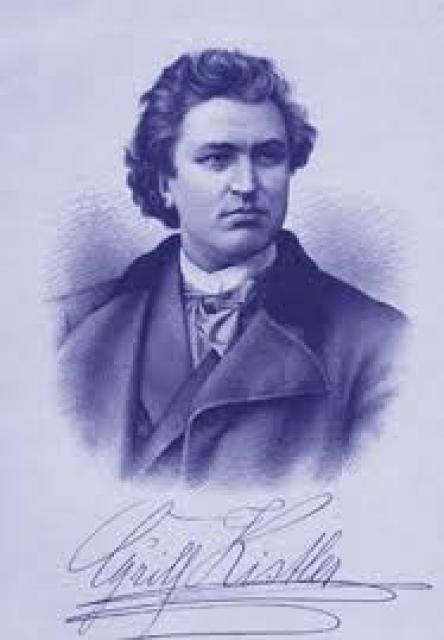
Cyrill Kistler
 Germany
- Cyrill Kistler: A Renowned German Composer and Music Theorist
- Early Life and Education
- Career and Notable Works
- Theoretical and Educational Contributions
- Pupils and Legacy
Cyrill Kistler: A Renowned German Composer and Music Theorist
Cyrill Kistler was a prominent German composer and music theorist known for his contributions to the world of classical music.
Early Life and Education
Born in 1848, Kistler's musical journey began in Munich, where he studied composition and organ with the esteemed teacher Josef Rheinberger from 1876 to 1878. In 1876, he sought guidance from the legendary Richard Wagner in Bayreuth, solidifying his status as a devoted follower of Wagner's musical principles.
Career and Notable Works
In 1884, Kistler settled in Bad Kissingen, where he established a music school and gained recognition as a composer. His significant works include several operas, such as "Baldurs Tod," "Kunigilde," and "Ulenspiegel."
Beyond operas, Kistler composed a notable symphonic poem entitled "Die Hexenküche" ("The Witches' Sabbath"). He also penned choral, organ, and piano pieces, as well as songs that showcased his musical versatility.
Theoretical and Educational Contributions
Kistler's influence extended beyond his compositions. He authored four volumes of textbooks on harmony and counterpoint between 1898 and 1904. These works provided valuable guidance for aspiring musicians, solidifying his legacy as a music theorist.
Pupils and Legacy
Kistler's teachings inspired a generation of musicians. Notable pupils included Emil Oberhoffer and Mieczysław Horszowski, who carried on his musical traditions. The legacy of Cyrill Kistler continues to inspire and influence musicians and music enthusiasts alike.