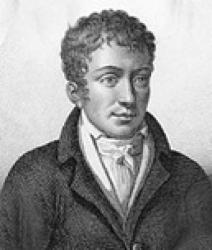
Dai Zhen
 China
China- Dai Zhen: A Neo-Confucian Thinker and Scholar
- Philosophical Teachings
- The Concept of Dao
- Nature and Goodness
- Methodology of "Textual Proof Investigation"
- Emphasis on Feelings and Desires
- Influence and Legacy
Dai Zhen: A Neo-Confucian Thinker and Scholar
Early Life and EducationDai Zhen, born on January 19, 1724, in Suxun, Anhui province, came from a humble merchant family. Despite failing the official examinations six times, his academic brilliance was recognized in 1775, when he was awarded the highest scholarly degree of jinshi and the prestigious title of Hanlin Academician without examination.
Philosophical Teachings
Harmonization of OppositionsAt the core of Dai Zhen's philosophy was the belief that the fundamental concepts of the universe, such as the "formless" (xing er shang) and "formed" (xing er xia) aspects of reality, were not absolute but rather temporary states of a unified "pneuma" (qi). This pneuma was constantly transforming and manifesting itself in the diverse forms of the world.
The Concept of Dao
Dai Zhen redefined the term "dao" ("path") by connecting its etymological component with the notion of "movement" or "action." He argued that dao encompassed not only the formless but also the formed, including the Five Elements (wu xing).
Nature and Goodness
Every entity has an "individual nature" (xing) that is inherently good (shan) and governed by humaneness (ren), propriety (li), and righteousness (yi). At the cosmic level, goodness manifests as dao, virtue (de), and principles (li), while at the human level, it appears as destiny (ming), individual nature, and abilities (cai).
Methodology of "Textual Proof Investigation"
Dai Zhen advocated for a "textual proof investigation" (kao ju) approach to scholarship, emphasizing the analysis of terms and their historical contexts to explicate ideas. His commentaries on Confucian classics criticized the distortions he perceived in previous interpretations influenced by Daoism and Buddhism.
Emphasis on Feelings and Desires
Unlike earlier Neo-Confucianists, Dai Zhen believed that principles (li) were inseparable from feelings (qing) and desires (yu). He argued that principles were not static entities but rather revealed through deep introspection and that abilities varied among individuals, but could be compensated for through education.
Influence and Legacy
Dai Zhen's ideas were not widely accepted during his time. However, in the 20th century, his emphasis on empirical and analytical methods resonated with the scientism of Chinese intellectuals. His works continue to shape Chinese thought and provide valuable insights into the development of Chinese philosophy, linguistics, and other academic fields.