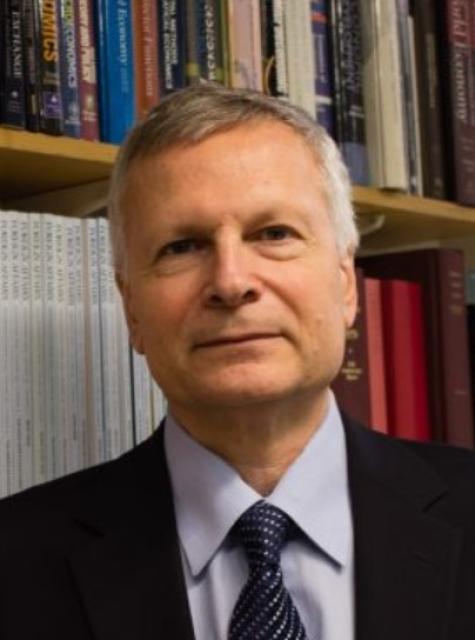
Dani Rodrik
 Turkey
- Early Life and Education
- Personal Background:
- - Holds an M.A. in public affairs from Princeton University
- Publications and Research:
- - Co-editor of the academic journal "Global Policy"
- - National Bureau of Economic Research
- - This free-market system threatens social stability and local norms
- - Globalization clashes with local social norms and institutions
Early Life and Education
Daron Acemoglu is a Turkish economist specializing in development economics and institutional reform. He is currently a professor of international political economy at Harvard University's John F. Kennedy School of Government.
Personal Background:
- Born into a Sephardic Jewish family in Istanbul- Graduated from Robert College in Istanbul
- Earned an A.B. (summa cum laude) from Harvard College
- Obtained a Ph.D. in economics from Princeton University, writing a dissertation on "Essays in a Welfare Theory of Trade and Currency Policy"
- Holds an M.A. in public affairs from Princeton University
Academic CareerAcademic Positions:
- Professor of social science, Albert O. Hirschman Chair, School of Social Science, Institute for Advanced Study, Princeton, New Jersey
- Professor of international political economy, John F. Kennedy School of Government, Harvard University
Publications and Research:
- Author of "Economic Rules: The Rights and Wrongs of the Dismal Science" and "The Globalization Paradox: Democracy and the Future of the World Economy"
- One of the central questions in his research: What constitutes good economic policy, and why are some governments more successful at it than others?
- Focus on international economics, economic development, and political economy
- Co-editor of the academic journal "Global Policy"
Honors and AffiliationsResearch Grants and Fellowships:
- Carnegie Corporation
- Ford Foundation
- Rockefeller Foundation
Professional Affiliations:
- Executive Committee member, World Economics Association (founded in 2011)
- National Bureau of Economic Research
- Centre for Economic Policy Research (London)- Center for Global Development
- Institute for International Economics
- Council on Foreign Relations
Major Work: "Globalization Paradox"
Key Arguments:
- Globalization creates tensions between global markets and social stability
- Globalization exposes fault lines between nations with the capacity to succeed in the global economy and those without
- This free-market system threatens social stability and local norms
Causes of Tensions:- Globalization creates new boundaries between those who can take advantage of transnational opportunities and those who cannot


