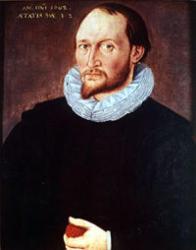
Daniil Bernulli
 Switzerland
- Biography of Daniel Bernoulli
- Education and Career
- Contributions to Mathematics and Science
- Daniel Bernoulli's contributions to science are immeasurable.
Biography of Daniel Bernoulli
Daniel Bernoulli was a Swiss physicist, mechanic, and mathematician. He was born on January 29, 1700, in Groningen, Netherlands, where his father taught mathematics at the university. In 1705, the family moved to Basel, Switzerland, where Johann Bernoulli inherited the position of mathematics professor after the death of his older brother Jacob.

Education and Career
Daniel studied at the Basel Gymnasium and then went to France in 1713 to improve his knowledge of the French language. After returning to Switzerland in 1716, he obtained a master's degree in philosophy. However, at the insistence of his father, Daniel pursued a career in medicine, considering it the most practical profession. He studied in Heidelberg and Strasbourg, and in 1720, after defending his dissertation "On Respiration," he became a licensed physician. But Daniel's heart was not in medical practice; he was more drawn to mathematical sciences.
In 1724, Daniel Bernoulli published his first scientific treatise, "Mathematical Exercises." That same year, he became a member of the scientific academy in Bologna and received an offer to lead the academy in Geneva. While Daniel was considering the offer, an invitation came from Russia to join the newly created St. Petersburg Academy by Peter the Great. The invitation was tempting, but Daniel did not want to part with his brother Nikolaus, with whom he had a touching friendship. The difficulty was resolved very simply when the president of the St. Petersburg Academy, Leonhard Euler, invited both Bernoulli brothers. In October 1725, the brothers arrived in St. Petersburg. Daniel was appointed to the chair of physiology, while Nikolaus worked in mathematics. They immediately became involved in the work of the academy. Unfortunately, Nikolaus Bernoulli's activity in St. Petersburg was short-lived. The climate of the northern capital was too harsh for him, and he died eight months after arriving in St. Petersburg.
Daniel Bernoulli remained in St. Petersburg until the summer of 1733. He conducted scientific research, delivered lectures, and participated in debates. Upon his return to Basel, Daniel Bernoulli obtained a chair in anatomy and botany at the university, but he focused more on experimental physics. In 1750, he became the head of the physics department, a position he held until the last days of his life. Science was Daniel Bernoulli's only passion, which might explain why he remained unmarried. Due to his dedication to science, he had strained relations with his father, with whom he constantly disputed priority. Both father and son independently dealt with the same problems and achieved success. This is evidenced by the following fact: in 1732, the Paris Academy of Sciences announced a competition on the topic "On the Mutual Inclination of Planets." Two works submitted to the competition were recognized as the best, and the prize was decided to be divided between their authors. When the envelopes with mottos were opened, it turned out that the authors were father and son Bernoulli. "I am glad that your son bears the seal of Bernoulli and preserves the inherited brilliance of the family," wrote Leibniz to Johann Bernoulli.
Contributions to Mathematics and Science
Daniel Bernoulli made significant contributions to mathematics. He studied the solution to the Riccati equation, which is often encountered in various mechanics problems. Daniel Bernoulli computed the limit of the expression (1+1/n)n, which is now known as the number e, the base of natural logarithms. He also worked on the theory of series, various special functions, and the theory of probabilities. He introduced the concept of moral expectation, which was later widely used by Laplace and Poisson. In gambling, the moral expectation of losing exceeds the moral expectation of winning. However, the concept of moral expectation did not receive further development.
Daniel Bernoulli proposed solving probability problems using differential calculus techniques, considering one as "infinitely small" compared to other "large numbers" encountered in the problem. Daniel Bernoulli's contributions to science cannot be underestimated. Alongside Mikhail Lomonosov, he stood at the origins of the kinetic theory of gases. In his works, one can find anticipations of Gay-Lussac's, Clapeyron's, and Charles's laws. Daniel Bernoulli was the first to state that the pressure of a gas is determined by the thermal motion of molecules. In hydrodynamics, Daniel Bernoulli derived the equation for steady flow of an ideal incompressible fluid, which expresses the law of conservation of energy. The Bernoulli's equation allows us to understand many phenomena in hydrodynamics and aerodynamics. It is used in the calculation of various pipelines, pumps, flowmeters, and in the study of filtration processes, among others.
Together with Leonhard Euler, Daniel Bernoulli made significant contributions to the study of the mechanics of fluids. For over fifty years, from 1727 to 1778, Daniel Bernoulli studied vibrations. In his early works, he investigated small oscillations of weights suspended on flexible strings and heavy homogeneous ropes. In subsequent works, he studied the vibrations of strings and rods, introduced the concept of simple harmonic oscillation, and justified the idea that the overall oscillation of a system is obtained by adding simple harmonic oscillations. This important principle later became known as the principle of superposition of oscillations. Daniel Bernoulli, along with d'Alembert, Euler, and Lagrange, can be considered one of the founders of mathematical physics.
Daniel Bernoulli was a very kind person. He donated large sums of money to the university where he taught, built a cheap hotel for traveling students, helped those in need, and more. He was free from envy and rejoiced in scientific achievements made by others. Daniel Bernoulli's scientific authority was very high, as evidenced by his election as a member of many foreign academies of sciences, including the Berlin Academy (1747), the Paris Academy (1748), and the Royal Society of London (1750). He continued his scientific activities until the last days of his life. On March 17, 1782, his servant found him peacefully sleeping in his chair, having passed away.