David Fedov
 Moldova
- Biography of David Fedov
- Early Career
- Return to Kishinev and World War II
- Later Career and Musical Achievements
- Awards
Biography of David Fedov
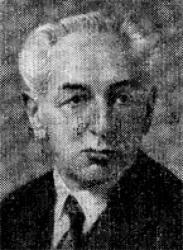
David Grigoryevich Fedov was a Moldavian Soviet composer, pianist, and conductor. He was born in 1915 in Kishinev, in the family of a trumpet player and klezmer musician, Grigory Feydman. Fedov began his music education under the guidance of his father and was accepted into a private conservatory in Kishinev at the age of eleven. He later studied at the Municipal Conservatory, studying piano under Y.M. Guza.
Early Career
During his time at the conservatory from 1932 to 1934, Fedov started playing in the orchestra of the Orpheum cinema under the direction of Charles Breitburd. It was during this time that he played alongside future colleagues in the jazz orchestra "Bukuria," such as saxophonist Harry Shiman and trumpeter Shiko Aranov. After completing his studies in 1934, Fedov moved to Bucharest, where he worked as a soloist and accompanist on the radio and in entertainment ensembles.
Return to Kishinev and World War II
In 1940, when Bessarabia was annexed by the Soviet Union, Fedov returned to Kishinev and found employment in the city's radio committee and the officers' club. He then joined the newly formed philharmonic. During World War II, Fedov served in the active military and performed solo concerts on the front lines. His interest in composition grew during this time.
After the war, Fedov returned to Kishinev in 1945 and enrolled in the Kishinev State Conservatory. He studied composition with Stefan Niaga and later with Leonid Gurov after Niaga's death. Even during his studies, Fedov composed several notable works, including a piano sonata, a scherzo for symphony orchestra, and the famous dance suite "Joc" (Hora, Căluşarii, Joc) that became part of the repertoire of Moldavian dance ensembles and Igor Moiseyev's dance ensemble.
Later Career and Musical Achievements
During his career, Fedov became the artistic director and chief conductor of the Moldavian Radio Committee Orchestra (later known as the Estrada-Symphony Orchestra of Moldavian Radio and Television). He also led the Moldavian Folk Music Ensemble called "Fluerash," where renowned opera singer Maria Biessu and violinist Sergei Lunkevich began their careers.
In addition to his conducting work, Fedov taught at the Kishinev Conservatory from 1958 to 1971. He also performed as a soloist with the Kishinev Philharmonic and worked as an accompanist.
Fedov's compositions include symphonic overtures, two concertos, compositions for folk instrument orchestras, and various solo pieces. He also wrote songs based on Moldavian folk poetry and arranged traditional Moldavian, Gagauz, and Bulgarian dances. His piano concerto, performed by Gita Strahilevich, Ludmila Vaverko, and Mikhail Zelzer, gained particular popularity. Fedov also composed music for several films, including "Gaiduk's Ballad" (1958) and "When the Storks Fly Away" (1965).
Awards
Fedov received numerous awards and accolades throughout his career. He was awarded the All-Union Film Festival Prize for his music in the film "Ataman Kodr" (1959).
David Fedov's contributions to Moldavian music and his unique blend of classical and folk elements remain an important part of Moldavian musical heritage.