Imre Calman
 Hungary
- Early Life and Education
- Compositional Debut and Musical Criticism
- Operetta Success in Vienna
- International Acclaim and Escape from Fascism
- Later Years and Legacy
Early Life and Education
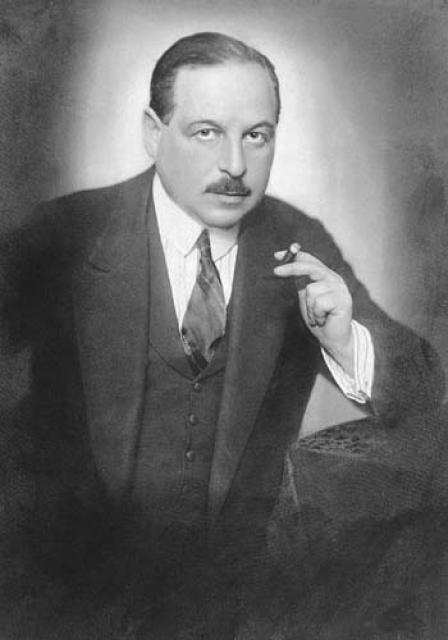
Imre Kálmán, renowned composer of operettas, was born on October 24, 1882, in the Hungarian village of Siófok. At the age of ten, he moved to Budapest, where he attended gymnasium and later pursued law at the university. Simultaneously, he studied music theory and composition at the Budapest Music Academy.
Compositional Debut and Musical Criticism
In February 1904, Kálmán made his debut as a composer with the performance of his symphonic poem "Saturnalia" at the Budapest Opera House. While continuing his legal studies, he worked as a music critic for a Budapest newspaper from 1904 to 1908. During this period, he composed numerous romances and instrumental pieces.
Operetta Success in Vienna
In 1908, Kálmán premiered his first operetta, "Autumn Maneuvers." Subsequently, he relocated to Vienna, where he would reside until 1938. In Vienna, he created his most famous operettas, including "The Gypsy Princess" (1912), "Die Csárdásfürstin" ("Silva," 1915), "Das Veilchen vom Montmartre" (1930), and "Prinzessin Zirkus" (1926).
International Acclaim and Escape from Fascism
"Die Csárdásfürstin" became an international sensation in 1915, elevating Kálmán's reputation as one of the leading composers in his genre. He embarked on a successful tour of Sweden in the early 1930s and was awarded the prestigious French Legion of Honour in 1934.
With the rise of fascism in Europe, Kálmán sought refuge in Zurich and later Paris in 1938. When the war reached France, he immigrated to the United States, where he spent eight years composing sparingly.
Later Years and Legacy
In 1948, Kálmán returned to Vienna and eventually settled in Paris in 1951. He passed away there on October 30, 1953. Kálmán's extensive repertoire includes not only over twenty operettas but also works for symphony orchestra, instrumental pieces, romances, vocal cycles, and articles.